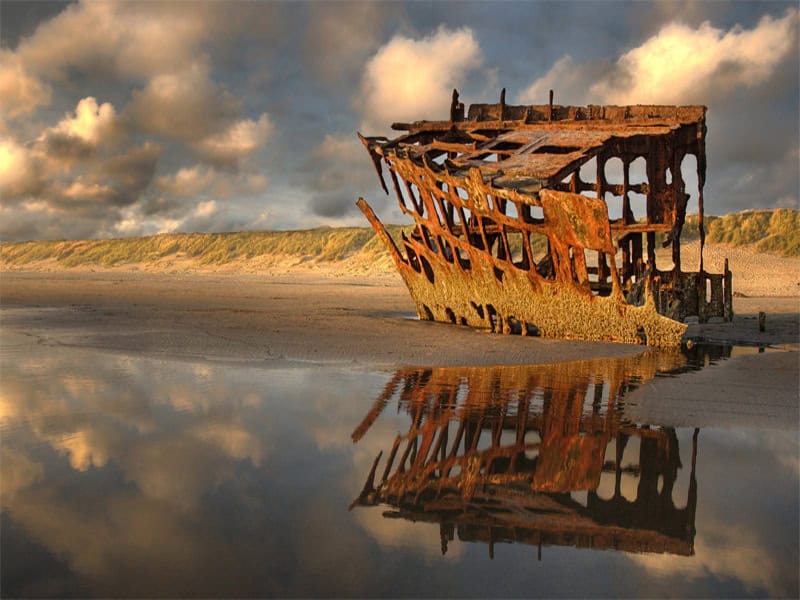
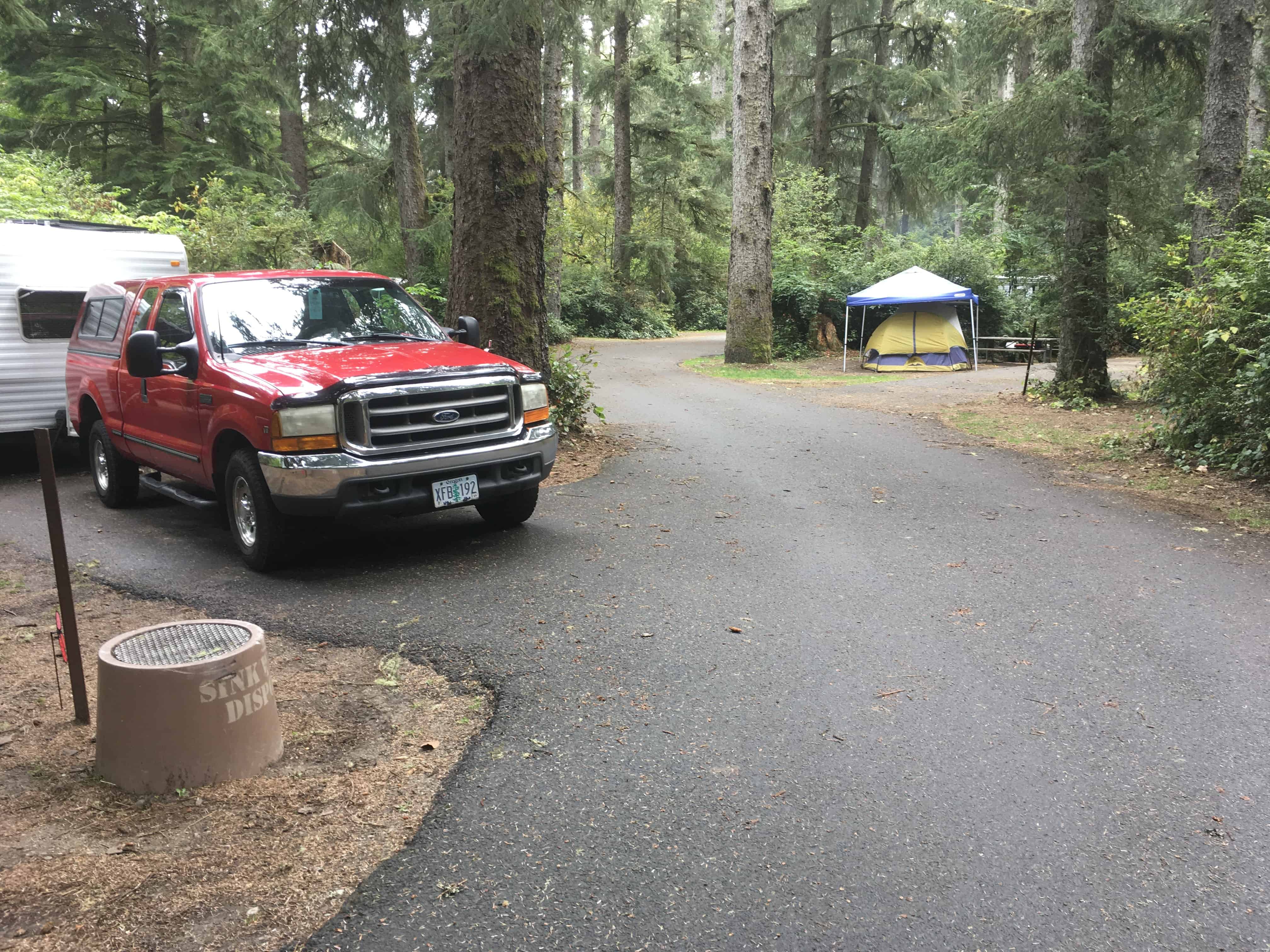
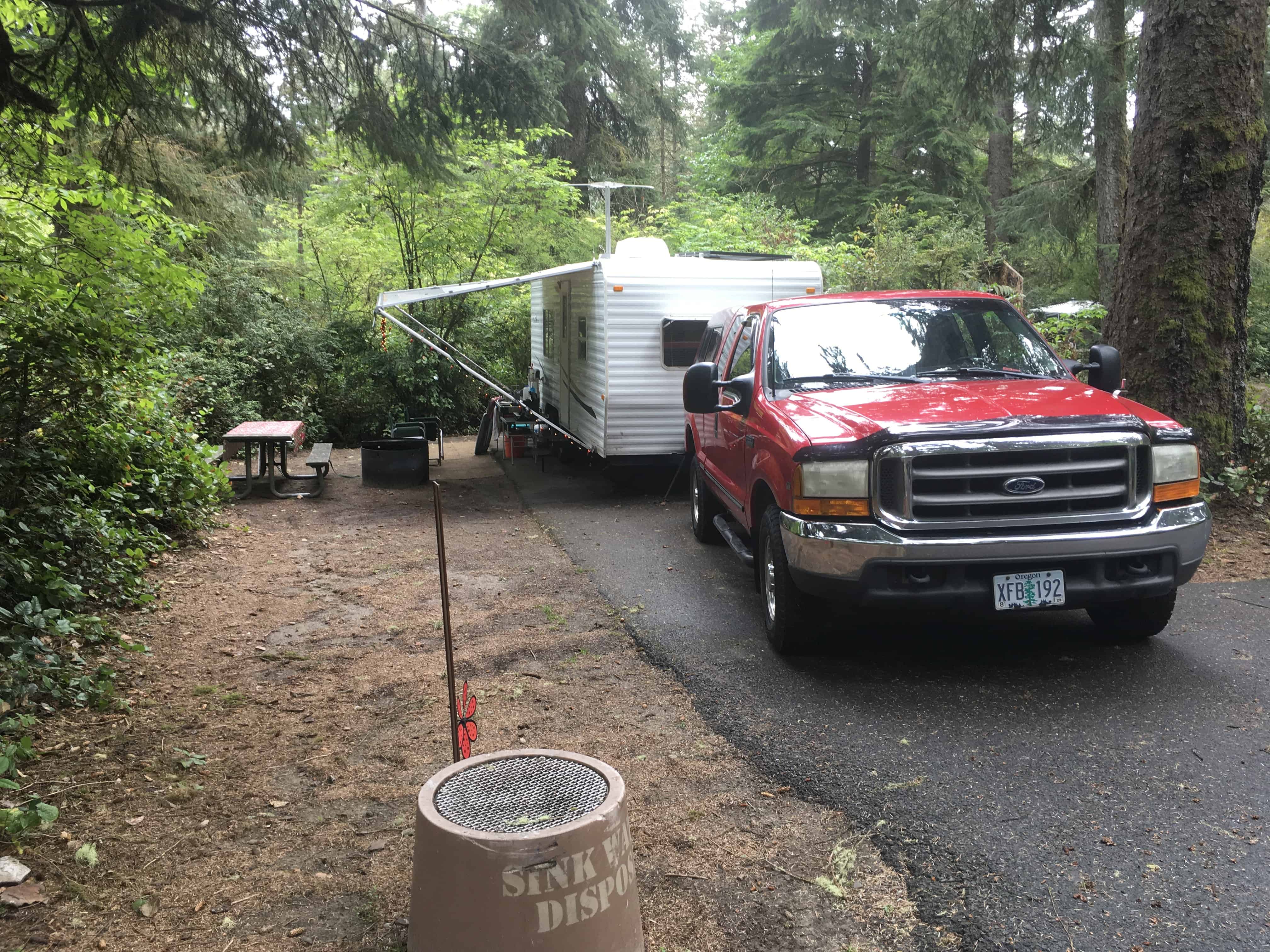
Fort Stevens State Park is a very large and well developed state park. Facilities here are all on a bit grander scale than many other state parks I’ve visited. From the quantity of camping loops, to the number of sites in each loop, everything here seems larger; except for the restrooms, but we’ll get to that later. The first thing you notice as you arrive at the campground is the massive size of the ranger station and its adjacent parking lot. Easily 2 or 3 times the size of any other state park welcome or ranger station. Checking in is super easy if you pay attention to the emails you receive from Reserve America. I received an email from Reserve America about my reservation about 3 days before arrival. That email guided me to print out some documentation that I would take with me to the campground that would allow me to check in without having to deal with anyone. Two forms were printed out, a parking pass to put on the dash of my RV and a registration form that I put in the box in the ranger station parking lot. With my registration form deposited and my parking pass on the dash I rolled into the north campsite drive, past a camp host who sits in a little booth looking for those parking passes and then onto our camping loop. We were located in E160, a somewhat rare pull thru campsite. Like a lot of state parks, the pull thru was sufficiently long enough for my rig, but the bend was a little sharp relative to my length. The utility stand was in a good location relative to my service compartment, right about in the middle of the drive, but again, due to the arc of the curve, remained very close to my rig. I certainly didn’t have any problems with cord or hose length. Putting out my awning was another issue entirely. Since there are pines located right next to the driveway, it was difficult to find a parking position that would allow me to put out my awning while having sufficient driveway length to hold a second vehicle. We shared the campsite with a friend who paid for separate vehicle parking and tent camped on the site. This site is very large, easy to share with a second family tent camping with plenty of room left over for camp chairs and equipment. The driveway was mostly level, but the width and arc meant that my steps hung out just over the transition from asphalt to dirt making the first step into the rig pretty high. The site isn’t private at all, and sites at Fort Stevens are very close together. Site privacy was very limited. We had a walkway from the loop to the bathrooms on the north side of our site with no vegetation break to shield us from the foot traffic. The back side of a back-in campsite (E164) abutted the south edge of our site, with only low growth vegetation separating us, their back window looking directly into our campsite. All the sites in the E Loop had power (50/30/20) and water, but no sewer hookups. We were only good for about 2 days before our tanks were full and we had to break camp to go dump. Sure, that is our fault and living style, but… Fort Stevens has one of the largest dump stations I’ve ever seen. Just outside of the official park gate, a 3 lane dump station. The dump station is easy to get in and out of and the facilities at the dump station are in excellent condition. There is also trash collection at the dump station, so you can take care of almost all of your basic needs while there. Fresh water is also available on each dump station lane close to the lane exit. Very typical, dump, then pull far forward to refill. Dumping is “free” for those who have paid to stay at the park. There is an honor box for a fee for those just passing through. Each camping loop at Fort Stevens has flush toilets and hot showers. Overall condition of the restrooms in the loop are good, but the size of the restrooms feels a bit small relative to the number of campsites in the loop. Very typical Oregon State Parks facilities, a lot of brown and orange colors, very government and industrial in appearance. Showers were accessed separately from the restrooms. Each shower stall has an outside door. Showers were reasonably large and private, however they get mucky pretty fast and by mid-day most of the stalls had a bit of mud and grime on the floor. The camp host worked hard to keep up with it. The absence of sewer connections in the loop seemed odd considering that about every 3 or so campsites there was a dish/wash water dump hole. Each wash water dump drain is a cone with the top cut off, about 2 ft. high with a mesh strainer on top. Designed to consume large wash basins of water very quickly, these drains obviously went to a larger sewer system which the rest of the facilities in the park link to. This also means that there is a loop of sewer line running through the camping loop to service these dump ports. Seems only logical that sewer lines could be run to most of the campsites with a bit more effort and cost. Note that only a limited number of camping loops are full service and most of the camp sites at Fort Stevens are partial hookup. The draw for visitors at Fort Stevens is the beach, the remains of the wreck of the Peter Iredale, the extensive trail system, and the abandoned naval fort buildings, along with a museum related to the old fort. If you are not so excited about your campsite, no big deal, the reason you came here was to relax, ride around on the trails, head out to the beach and explore. Bike, kayak, and other selected equipment rentals are available on site. There are also some guided tours and kayak tours available for purchase. Bringing your bike or scooter along is an absolute necessity, especially if you want to explore the park or the trails or cover ground efficiently to visit other places in the park. Again, this is a massive park, so be prepared to walk a lot or have some form of non-motorized transportation. The trail system through the park is a mix of fully paved trails, and some more rustic unpaved trails. Paved trails have direction and point of interest markers at Intersections. It is pretty hard to get lost on the paved trails, plus you can always find somebody on the trail more familiar with it than you who will point you in the right direction. I’ve never seen quiet hours so aggressively enforced, or attempted to be enforced, at a state park. Around 10pm (start of quite hours) pairs of park rangers walk the loops and if they think you are too loud they will mention it to you. I know that some welcome this, but I found the exercise to be odd, and not generally productive. After the rangers make their way through, for some campers it is business as usual, so not really an effective noise control technique. Note, that the rangers would not come through again after their evening walk through, their shift was probably over. But after a day or so of this pattern campers got the idea, everything went silent in the loop about 9:50, the rangers came through and left, and sound volumes escalated a little by about 10 after 10. Now, to be clear, we did not have noisy neighbors in our loop, and I didn’t notice anything all that noisy or out of control in neighboring loops. By about midnight you could hear a pin drop in the park, and you could actually hear the ocean in the background. In the same week we camped at a different Oregon State Park and quiet hours were merely a suggestion there, along with my conversation with other campers familiar with most of the Oregon State Park system indicating that Fort Stevens seems to be the only park that conducts the “walk thru” every evening. Cellular service in the park is spotty at best. My friend had Verizon service and could make and take phone calls and get regular text messages, but anything that required Internet data was impossible. I have AT&T and while the phone showed 1 bar of LTE or 4G service all the time, could not connect to make calls, did not receive calls, and text messages were impossible. Data was also non-existent. Ironically, AT&T service at the beach is excellent and we had great cell service and data service while visiting the beach. The campground does sit in a significant topographical depression between the ocean and the rest of Warrington, so lack of cell service makes sense. Leave the park toward the road that brings you there and you’ll pick up good cell service again. This is a family trip park. Expect lots of kids, bikes, scooters, skateboards, OneWheels and daytime activity. Proximity of campsites to each other means you know when your neighbors are up, what they are cooking, if they have a campfire, when they go to bed, and you might even overhear their conversations. Lots of campers are there in groups, so again, lots of people outside, and lots of movement between campsites. If you are looking for seclusion, this is not the place. All this said, we love Fort Stevens, recommend it for everyone, especially families with kids, history buffs, nature lovers, explorers, trail riders, etc.
Explore Fort Stevens State Park in 360°
This campground has a full virtual tour with interactive campsite markers. Walk through every loop, inspect individual sites, and see the views before you book.
Launch Virtual Tour →✅ Amenities & Features
📖 About This Campground
⭐ 2 Reviews⭐⭐⭐⭐ 4.2
Our first trip to Fort Stevens in September. We camped here 5 days and was in spot J-195, not a real great spot for us because it is 90* to the road and because of the tent water drain was close at the right side of the driveway it was real difficult backing in our 21’ trailer. We found that only loops (H, I, L and M) have complete full hookups and not just water and electric like (J) loop. After looking around we found many other much better spots we could camp in. Most camp sites have the Fire Ring and picnic table in the back of the site close to the asphalt driveway where if you open your awning up it would overhang the fire ring and not be useable, like our site was. Many sites are very skinny and only have room for the asphalt driveway and maybe 10 additional feet beside the driveway. And most sites are only 35-45 feet deep. We drove to many of the fort sites like the gun bunker and the reconstructed wooded fort itself as it was very close to our site. Warrington was also close bye for shopping at Walmart, Costco and many others. Then we stopped at the Fish Mongers in Hammond and ate cod fish and chips, good food! We also drove to the Astoria column. We haven’t been there for more than 15-20 years and found it great looking, and the view from up there was spectacular overlooking the Columbia River and Astoria. While we were here, we saw 3 Elk’s eating tree leaves right across from our camp site. They were not spooked by anything and calmly walked and ate down the road. We also walked to the beach and saw the ship wreck and found you can drive on the beach if you have 4-wheel drive. The bathrooms were clean and the whole campground have many camping host’s per loop to keep things is good working order. A very large campground with over 300 sites. Most of the camp sites are close together and have little or no cover between sites. Many nights from our camp we heard kids playing, adults talking, laughing and other loud noise close by. We used our American the Beautiful Senior pass to get free access to many of the paid Federal site locations close bye and this has saved us many costly fees.