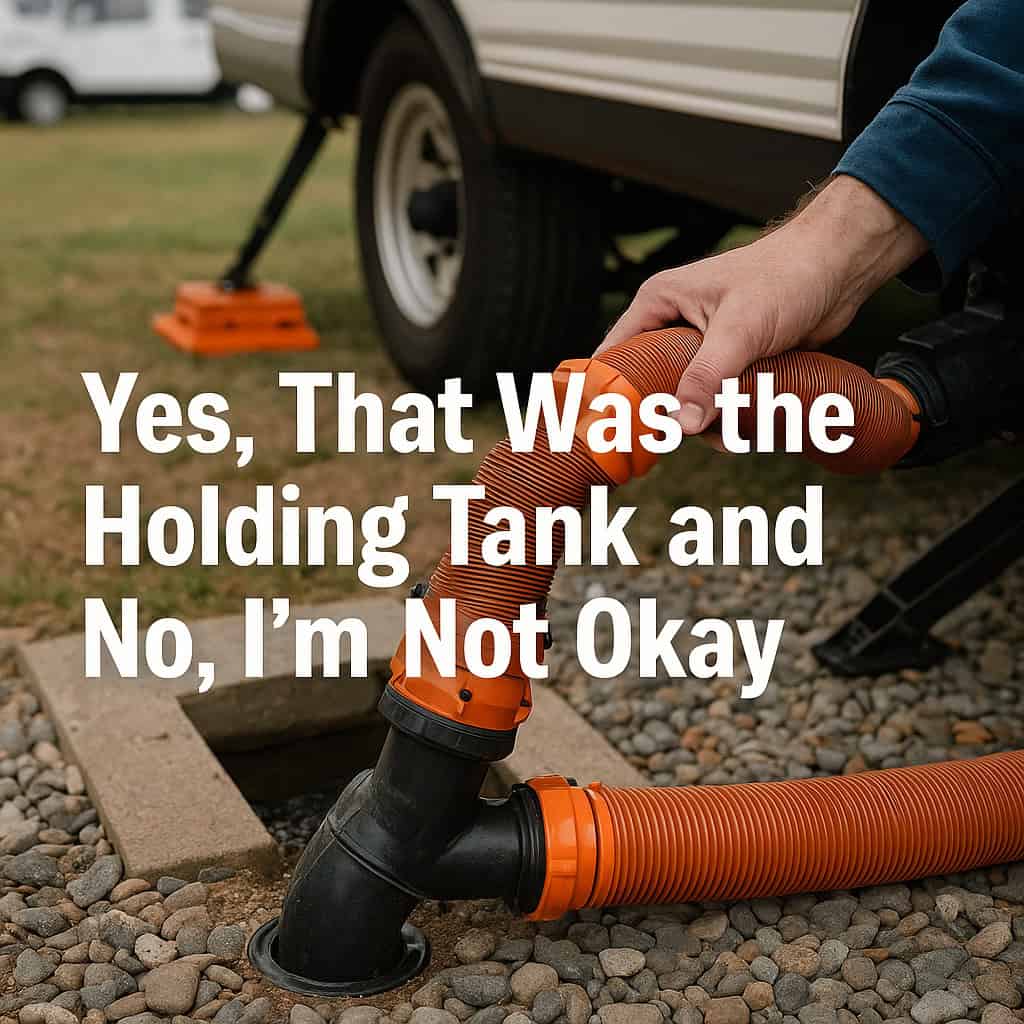
Because some RV experiences stick with you forever—and not in a good way.
🚽 The Unspoken Truth About RV Life
Everyone loves to talk about sunsets, road trips, and campfire s’mores.
What doesn’t get enough airtime? The holding tank.
At some point in your RV journey, you’ll have a moment where the tank rebels—whether it’s a splash back, a leak, or a line at the dump station that’s moving way too slowly. And in that moment, you’ll whisper the universal camper mantra:
“I am not okay.”
💧 The Horror Stories We Don’t Share on Instagram
-
The hose that wasn’t attached properly.
-
The black tank valve pulled too fast.
-
The unexpected “burp.”
-
The one time someone thought flip-flops were dump station appropriate footwear.
If you haven’t had your “tank trauma” story yet… you will. And it will bond you forever with fellow campers who get it.
🧰 Surviving the Scene (and Yourself)
-
Gear Up Like a Pro
Gloves, wipes, and a dedicated pair of “dump shoes” aren’t optional—they’re survival essentials. -
Go Slow
The tanks are in no rush, and neither should you be. Controlled releases prevent chaos. -
Rinse, Rinse, Rinse
Even if you think it’s “good enough,” a rinse buys you peace of mind (and a fresher rig). -
Humor Helps
If you don’t laugh, you’ll cry. And honestly? Sometimes you’ll do both.
🧠 What You Learn from Tank Trauma
-
Patience: Nothing humbles you like waiting in line to dump.
-
Preparedness: The right gear makes the difference between “mild inconvenience” and “trip-ruining catastrophe.”
-
Perspective: After a holding tank mishap, everything else in RV life feels easy.
❤️ The Bright Side
Here’s the thing: yes, it’s gross. Yes, it’s stressful. But it’s also universal. Every camper has a story, and those stories are what make this lifestyle more than just a highlight reel.
If you’ve had a tank disaster—congratulations, you’re officially part of the club.
💡 Want to avoid doubling your tank trauma with bad site placement?
Check out Campground Views to preview dump station layouts and site access before you roll in.