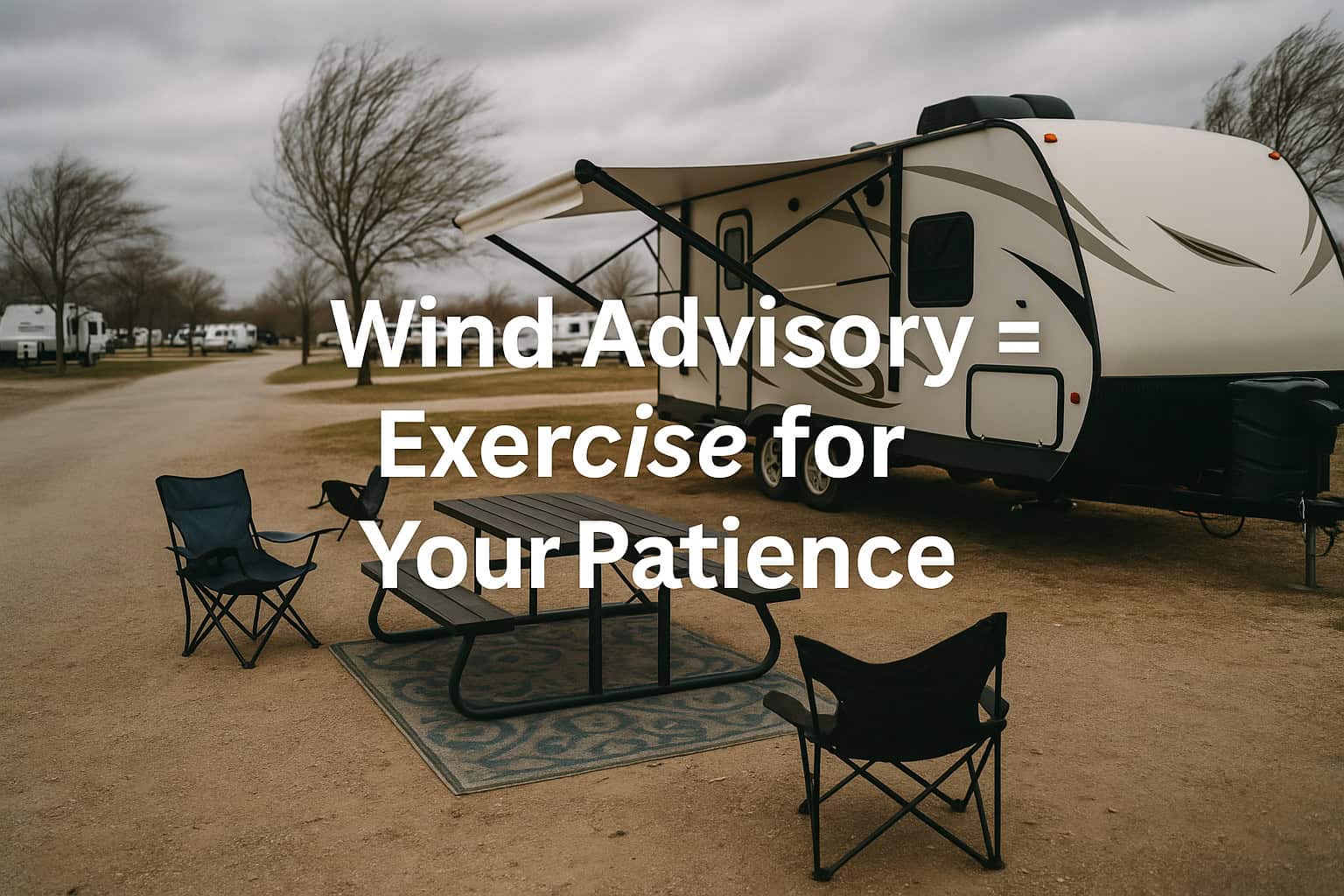
(Because your rig may be aerodynamic, but your nerves aren’t.)
If you’ve ever driven an RV in a crosswind, you know: “Wind Advisory” isn’t a weather update—it’s a threat.
It’s the universe’s way of asking, “How steady are your hands… and your mood?”
Let’s talk about surviving the blowy days—mentally, physically, and emotionally (because your coffee won’t survive the first gust).
🌬 1. The Drive Becomes a Workout
Forget the gym. You’ll get your upper-body session holding the wheel steady while your mirrors wiggle like jazz hands.
Pro tip: Ease up. Slowing down by 5–10 mph saves fuel, spares your sanity, and keeps your lane changes intentional—not interpretive.
🪟 2. Windows, Vents, and Flying Paper Towels
Inside? It’s chaos. A single cracked window turns your rig into a wind tunnel that can relocate napkins, receipts, and possibly small pets.
Close what you can. Clamp down the rest. And if your roof vent starts flapping? Congratulations—you now own an airborne percussion instrument.
🪑 3. Camp Setup? Maybe Tomorrow.
If your awning’s doing the cha-cha, it’s not bravery to leave it out—it’s denial.
Same goes for flags, chairs, and those cute little flamingos.
Pack it down, hunker in, and enjoy the sound of nature reminding you who’s boss.
🧠 4. The Emotional Rollercoaster of Gusts
The stages of wind grief:
-
Denial: “It’ll calm down soon.”
-
Anger: “WHY IS THIS HAPPENING ON MY TRAVEL DAY?”
-
Bargaining: “Maybe if I face west…”
-
Acceptance: “Fine. We’re staying another night.”
🎯 5. Pro Moves from Seasoned RVers
-
Park nose-into-the-wind whenever possible
-
Keep slides in if gusts hit 40+ mph
-
Use X-chocks and stabilizers, not optimism
-
Listen for your awning brackets—the squeak before the scream is your warning
💬 Final Thoughts
Wind is the invisible travel companion you didn’t invite but have to tolerate. It’s part of RV life’s charm… and its cardio.
So when the forecast says “Advisory,” treat it as your cue to slow down, strap in, and let your patience do the heavy lifting.
🐟 Want to preview how exposed your next site is before you roll in?
Use Campground Views to check tree cover, windbreaks, and site angles—so you’re not learning aerodynamics the hard way.