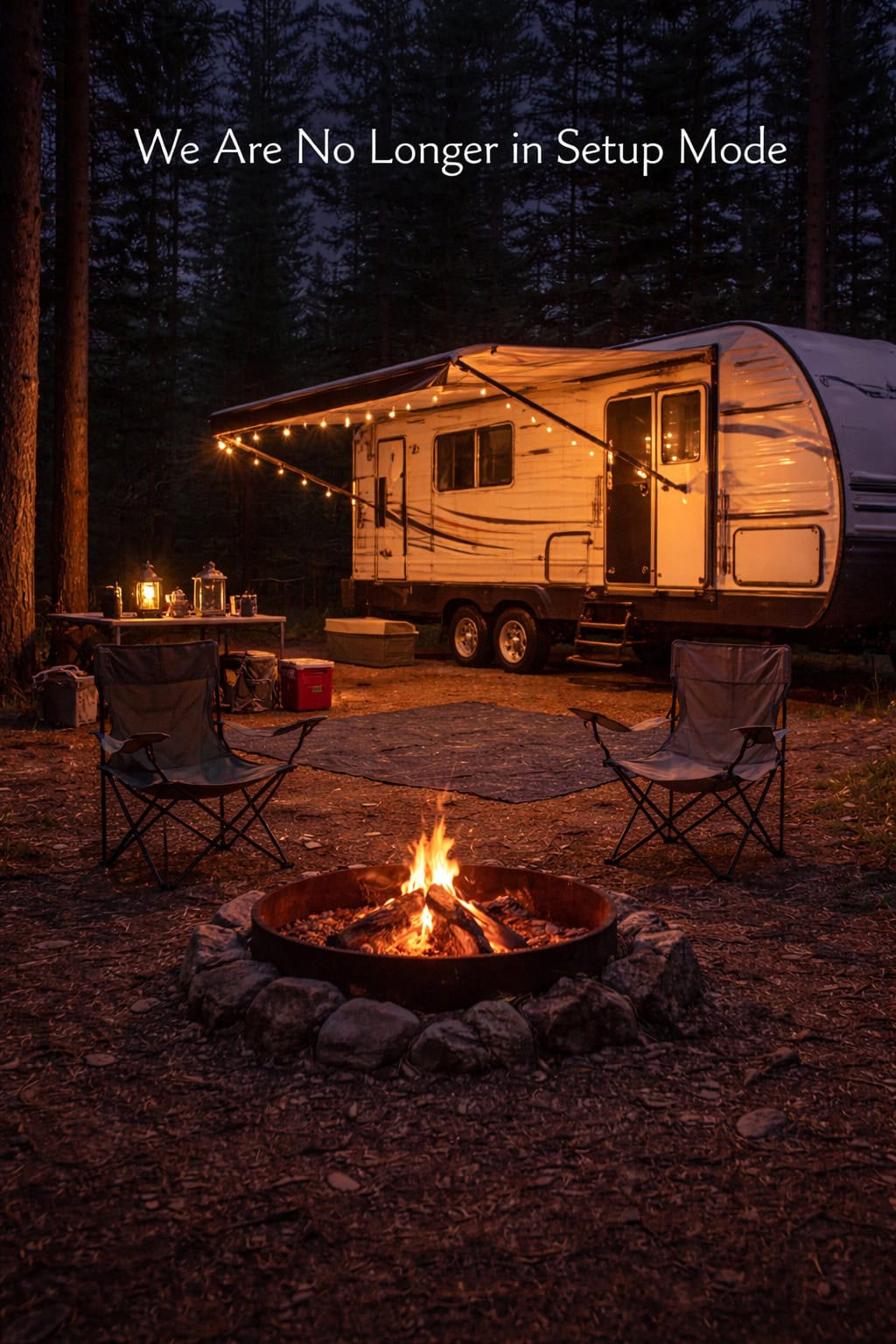
(The system is live.)
There was a phase where everything was provisional.
Temporary.
Subject to change.
That phase has ended.
With quiet certainty, you recognize the shift:
We are no longer in setup mode.
🧠 1. The Environment Has Stopped Asking Questions
Nothing is prompting:
-
“Should we move this?”
-
“Do we need to redo that?”
-
“Is this just for now?”
The answers have settled.
🔄 2. Actions Have Consequences Now
In setup mode, everything is reversible.
Outside of it:
-
changes ripple
-
adjustments cost effort
-
decisions stick
You feel that weight—and respect it.
😅 3. The Urge to Tweak Has Faded
Not because things are perfect.
Because they’re working.
Optimization has been replaced by use.
That’s a milestone.
🧭 4. Attention Shifts to Living, Not Arranging
You stop scanning for improvements.
You start:
-
moving through the space
-
using systems as intended
-
letting things be
This is the point of setup.
🛠 5. Stability Is the New Priority
Anything you touch now should:
-
solve a real problem
-
improve function meaningfully
-
justify the disruption
Otherwise, it stays as is.
🧠 6. Saying It Locks the State
“We are no longer in setup mode.”
That sentence:
-
prevents unnecessary fiddling
-
aligns expectations
-
marks the transition clearly
Everyone adjusts instantly.
🧘 7. Comfort Improves Quietly
Not because conditions changed— but because decisions stopped.
Mental load drops. Presence increases.
🧠 8. You Can Always Re-Enter Setup Mode
But only intentionally.
For now, this configuration holds.
And that’s exactly right.
💬 Final Thoughts
“We are no longer in setup mode” isn’t finality.
It’s readiness.
You moved from arranging to inhabiting, from planning to using, from provisional to real.
That’s not the end of work.
That’s the beginning of experience.
🐟 Want to exit setup mode faster next time? Use Campground Views to preview layout, access, and conditions before you arrive—so fewer decisions are needed on site.
🔗 Follow us for more RV life truths, transition-aware humor, and content for people who’ve absolutely paused, looked around, and thought, “Okay. We’re here now.”