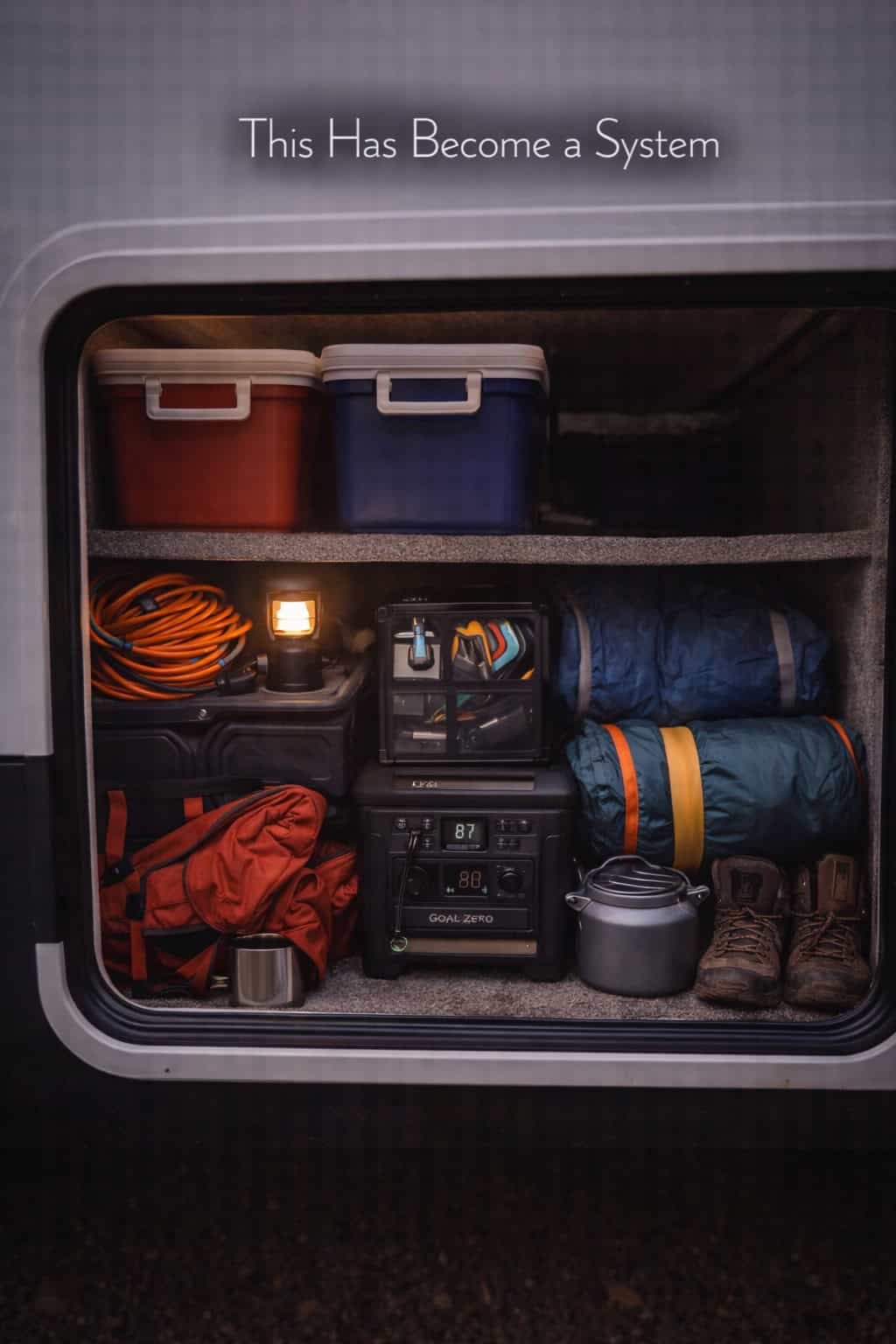
(Repeatability has emerged.)
What started as a workaround.
Then a habit.
Then a sequence that kept happening the same way.
At some point, you notice the shift and name it accurately:
This has become a system.
🧠 1. It No Longer Requires Thought
That’s the tell.
Steps happen automatically. Order is remembered. Nothing needs explaining.
Cognition has been replaced by flow.
🔄 2. The System Was Not Designed—It Evolved
No whiteboard. No documentation.
Just:
-
trial
-
error
-
repetition
The best systems grow this way.
😅 3. Efficiency Is a Side Effect
You didn’t set out to optimise.
You set out to survive the task.
Efficiency showed up later and stayed.
🧭 4. Deviating Now Feels Risky
Not because alternatives are bad— but because this works.
Known systems feel safer than theoretical improvements.
That’s earned trust.
🛠 5. The System Is Flexible, Not Fragile
It adapts. It absorbs small changes. It recovers from interruption.
That’s how you know it’s real.
🧠 6. Saying It Acknowledges Mastery
“This has become a system.”
That sentence:
-
validates the effort
-
marks the transition
-
signals stability
Everyone understands the weight of it.
🧘 7. You Protect It Quietly
You don’t advertise it. You don’t tinker without reason.
You let it do its job.
🧠 8. This Is How Experience Compounds
Not in big leaps.
In systems that form without announcement—and then carry you forward.
💬 Final Thoughts
“This has become a system” isn’t formality.
It’s progress made durable.
You turned repeated effort into something reliable, removed friction from the future, and earned predictability without forcing it.
That’s not routine.
That’s competence—on autopilot.
🐟 Want systems to form faster next time? Use Campground Views to preview layout, access, and conditions before you arrive—so repetition starts closer to optimal.
🔗 Follow us for more RV life truths, pattern-recognition humour, and content for people who’ve absolutely realised, “Oh. We do this now.”