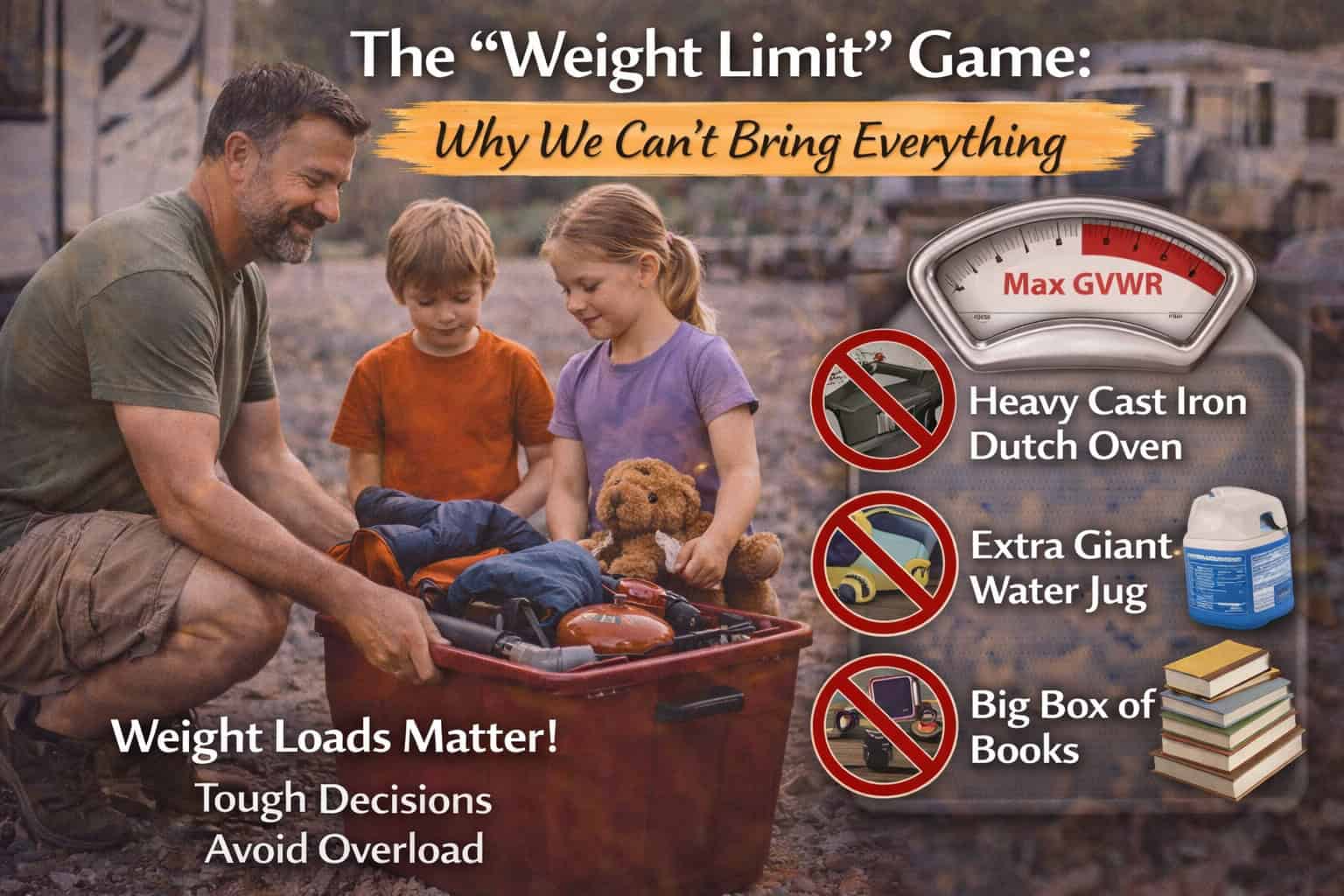
The "Weight Limit" Game: Why We Can’t Bring Everything
The Physics of a Safe and Smooth Ride
Have you ever tried to carry a backpack that was so full of heavy books that you started to wobble? An RV is exactly the same! It might look like a big, strong house on wheels, but every RV has a "secret limit" to how much weight it can carry.
Playing the Weight Limit Game isn't just about being organized—it’s about keeping the tires safe and making sure the RV can stop quickly when the driver hits the brakes. Here is how you can be a "Weight Warrior" for your family.
1. The Secret Code: GVWR
The Science: Every RV has a sticker (usually on the driver’s side door or the front frame) that lists its GVWR (Gross Vehicle Weight Rating).
-
What it means: This is the maximum amount the RV can weigh when it is fully loaded with people, water, fuel, and all your gear.
-
The Rule: If you go over this number, the brakes might get too hot, and the tires could get "tired" and pop.
-
Your Job: Think of the GVWR as the "Elevator Limit" for your RV. We never want to go past it!
2. The "Water Weight" Surprise
The Science: Water is very heavy! One gallon of water weighs about 8.3 pounds.
-
The Math: If your RV has a 50-gallon fresh water tank and you fill it all the way up before you leave home, you just added 415 pounds to the RV. That’s like having three extra adults sitting on your floor!
-
The Strategy: Pro campers often travel with their water tanks nearly empty and fill up once they get close to the campground. This makes the RV lighter and easier to drive.
-
Your Job: Remind the crew: "Do we need a full tank for the drive, or can we fill up at the park?"
3. The "Heavy Stuff" Basement
The Science: Where you put your gear is just as important as how much it weighs. This is called Center of Gravity.
-
The Rule: Heavy things (like canned food, toolboxes, or gallons of juice) should be stored low and over the axles (the wheels).
-
Why it matters: If you put heavy things in the high cabinets, the RV will "sway" or tilt more when you turn a corner. Keeping the weight low keeps the RV "glued" to the road.
-
Your Job: Help pack the heavy items in the floor-level cabinets or the "basement" storage under the RV.
4. The "One-In, One-Out" Challenge
The Science: Overloading often happens because we keep adding things without taking anything away.
-
The Game: Every time you want to bring something big or heavy (like a new bike or a giant bag of firewood), you have to find something to leave behind.
-
The Goal: This keeps the RV at a steady weight and prevents "clutter creep."
-
Your Job: Be the "Weight Guard." If you see the hallway filling up with extra bags, ask: "Is this essential, or is it just extra weight?"
5. The "Souvenir" Alert
The Science: Many people forget that the things they buy on vacation add weight for the trip home.
-
The Problem: If you find 50 pounds of cool rocks at the beach and put them in the back of the RV, you’ve changed the balance of the vehicle for the drive home.
-
The Fix: If you're collecting things, try to find "light" souvenirs like postcards, stickers, or photos.
-
Your Job: Remind the family that the "Ship" has to carry everything back home, too!
Pro Tip: The "Scale" Field Trip. Did you know you can weigh your RV? Large gas stations (like CAT Scales) have giant scales that trucks use. Ask your parents if you can stop and weigh the RV. It’s a fun way to see exactly how close you are to your GVWR!
Final Thoughts
When an RV is "light and right," it uses less gas and is much safer to drive. By playing the Weight Limit Game, you’re helping your parents stay relaxed and making sure the tires and brakes stay in tip-top shape. You aren't just a passenger; you’re the Logistics Manager!
Great job keeping the balance!
Want to see if a campsite has a flat spot for your heavy RV to park? Heavy RVs need solid, level ground so they don't sink! CampgroundViews.com lets you take a 360-degree tour of the site. You can look at the parking pad to see if it’s thick gravel or solid concrete before you arrive.
Check your parking pad at CampgroundViews.com!