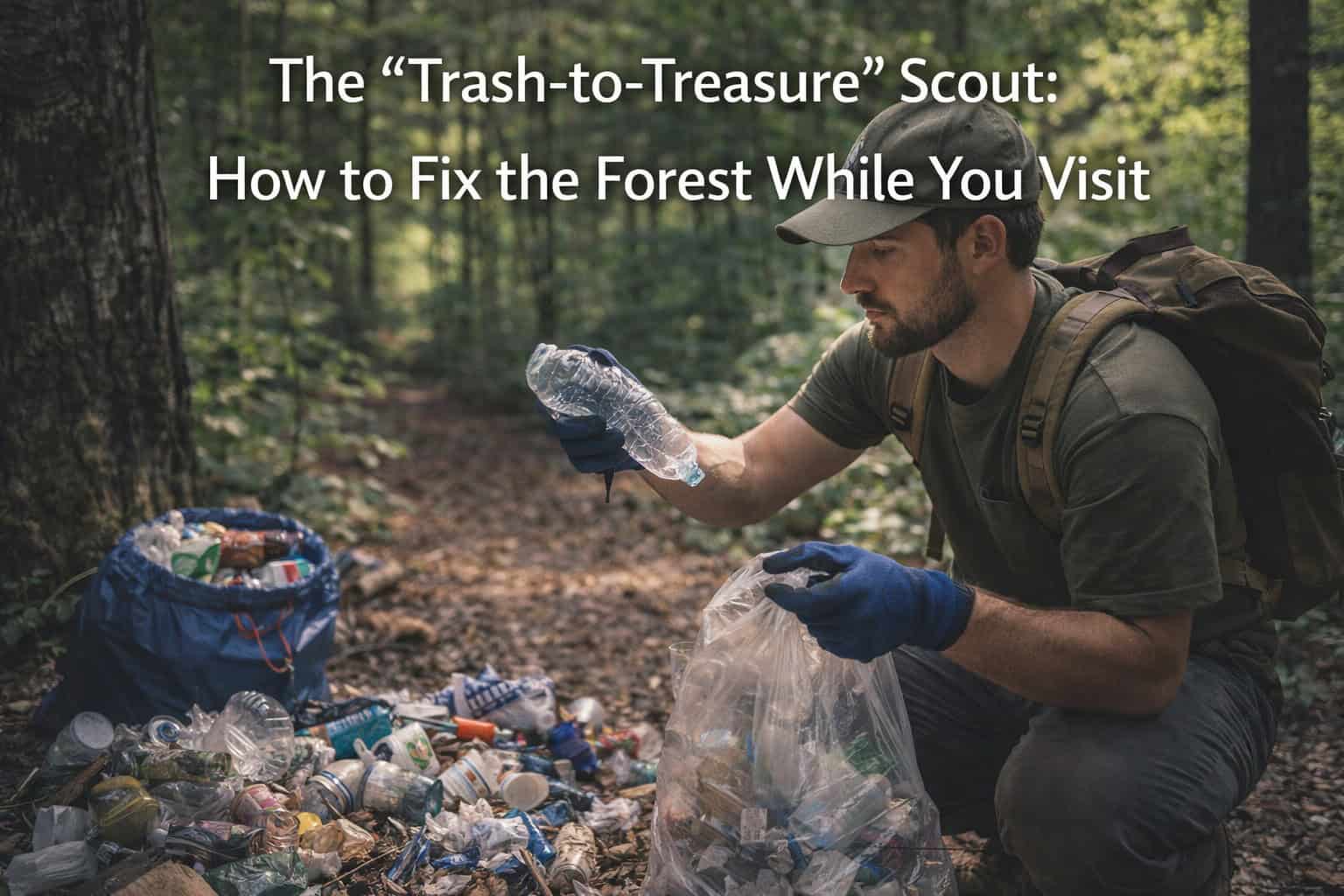
There is a specific kind of "trail rage" that hits when you’ve hiked five miles into a pristine wilderness area only to find a discarded energy drink can nestled in the ferns. It breaks the spell. Suddenly, you aren’t an explorer in an ancient forest; you’re just a guy standing next to someone else’s garbage.
In 2026, the "Leave No Trace" philosophy—while noble—is becoming the bare minimum. If we want our outdoor spaces to survive the surge in popularity they’ve seen over the last few years, we need to move from "Neutral" to "Positive."
Enter the "Trash-to-Treasure" Scout. This isn't about being a janitor; it's about being a guardian. It’s the art of leaving a campsite or trail significantly better than you found it.
1. The "Micro-Litter" Eye
Most people will pick up a big plastic bag if they see one. But the real damage to ecosystems often comes from the things we overlook. To be a Scout, you have to train your eyes to spot the "micro-trash":
-
The "Micro-Plastics" Trap: Tiny corners of granola bar wrappers, bread ties, and bottle seal rings.
-
The "Vintage" Trash: Old pull-tabs or rusted cans from the 70s. (Note: Some consider these "artifacts," but in a high-traffic campsite, they’re usually just hazards).
-
The Micro-Fiber Menace: Bits of frayed nylon rope or synthetic tent stakes left behind.
The Strategy: Set a "5-Minute Sweep" timer before you pack out. Walk the perimeter of your site in a spiral, looking for anything that isn't a rock, a leaf, or a stick.
2. The Scout’s Toolkit
Being a "Trash-to-Treasure" Scout doesn't require a hazmat suit, but a few small additions to your pack make the job much easier (and cleaner).
| Item | Why You Need It | The "Pro" Move |
| Gallon Ziploc/Silicone Bag | A dedicated "Gross Stuff" bag. | Use a dedicated dry bag for "found" trash so it doesn't leak in your pack. |
| Lightweight Gloves | Protects your hands from glass or sharp metal. | Nitrile-dipped work gloves offer great dexterity for tiny bits of plastic. |
| The "Grabber" (Optional) | Saves your back on long trail cleanups. | A set of lightweight chopsticks works surprisingly well for picking up micro-trash. |
| Biodegradable Bags | For larger hauls found at trailheads. | Pack an extra bag to give to a fellow camper who might need one. |
3. Turning "Trash" into "Treasure"
The "Treasure" isn't usually something you keep; it's the restoration of the vista. However, there’s a psychological "treasure" to this practice:
-
The "Dopamine Hit" of Competence: There is a profound sense of agency that comes from fixing a problem you didn't create. It shifts you from a "consumer" of nature to a "steward" of it.
-
The "Clean Slate" Effect: When you leave a site spotless, the next group is statistically less likely to litter. Your one act of cleaning can prevent a dozen acts of negligence.
-
The Community Treasure: If you find something truly unique (and safe), like a lost high-end multi-tool or a lens cap, post it on the local trail forum. Being the person who returns a "lost treasure" is the ultimate scout move.
4. The Ethics of "Leave It Better"
While picking up trash is great, don't forget the other side of the "Treasure" coin: Leaving natural treasures where they belong.
-
Don't "Clean" the Nature: Leave the cool rocks, the bleached elk shed, and the interesting driftwood.
-
The "Un-Fire" Pit: If you find a massive, illegal fire ring filled with unburned trash and glass, dismantle it. Scatter the cool rocks and blend the site back into the forest floor.
Scout Your Impact Before You Arrive
The best way to be a "Trash-to-Treasure" Scout is to know exactly what you’re walking into. If you’re heading to a high-traffic area, you can bet there will be a few things to "restore."
Before you head out to do your part, use CampgroundViews to see your campsite in high definition. Their 360-degree virtual tours let you scout the terrain, check the condition of the fire pits, and see the general "health" of the site before you even pull into the park. It’s the ultimate tool for planning a trip that’s as good for the planet as it is for your soul.
Click here to find your next restoration project with the Best Camping Tool Ever!