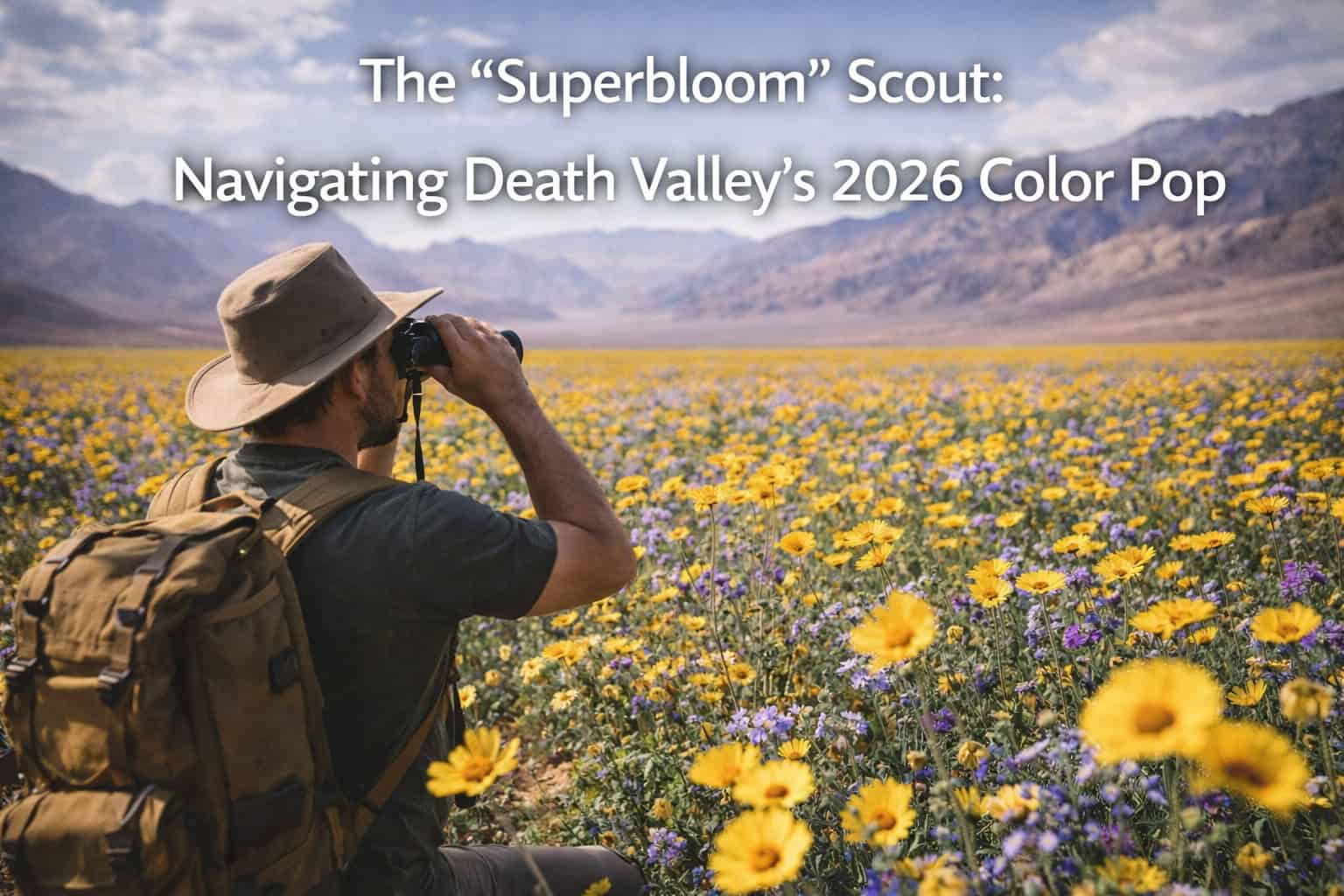
The "Superbloom" Scout: Navigating Death Valley’s 2026 Color Pop
If you’ve been scrolling through your feed lately, you’ve seen it: a vibrant, almost neon carpet of gold and purple stretching across the desert floor. It’s 2026, and we are currently witnessing what botanists are calling a "Once-in-a-Decade" Superbloom. After the record-breaking atmospheric rivers of last winter, the seeds that have been dormant in the Death Valley soil for years have finally woken up. But here’s the thing: a superbloom is a moving target. If you just show up at the park entrance and hope for the best, you’re likely to find more dust than daisies.
To be a true "Superbloom Scout," you need to understand the rhythm of the desert. Here is how to catch the 2026 color pop before the April heat pulls the curtain.
1. The Elevation Chase
Flowers don't all bloom at once; they follow the thermometer. In late March, the "wave" is moving uphill.
-
Low Elevations (The Sea Level Fade): The famous "Desert Gold" sunflowers that blanketed the valley floor in early March are starting to go to seed. You'll still see patches, but the "yellow carpet" is thinning.
-
Mid-Elevations (The 2,000–4,000 ft Sweet Spot): This is where the magic is happening right now. Look for the Notch-leaf Phacelia (the deep purples) and Desert Five-Spot. The temperatures here are still cool enough to keep the petals turgid and bright.
-
High Elevations (The April Preview): If you miss this weekend, don't panic. By mid-April, the bloom will move to the higher mountain passes (5,000+ ft), where the cactus flowers and desert paintbrushes will take over the show.
2. High-Tech Scouting: AI and Satellite Maps
In 2026, we don't have to rely on rumors from the ranger station.
-
Satellite Moisture Mapping: Use modern NDVI (Normalized Difference Vegetation Index) satellite data to see exactly where the ground is greenest. These maps show "biomass" density, pointing you to the thickest flower carpets before you even leave your driveway.
-
AI Bloom Trackers: New apps now use crowd-sourced, geotagged photos to create heat maps of specific species. Want to find the rare Desert Star? There’s a filter for that.
3. The "Color-Loading" Bio-Hack
Why does looking at a field of flowers feel so much better than looking at a high-res screen of the same thing? It's called Color-Loading.
Our brains evolved in high-contrast natural environments. The specific "optical frequency" of natural wildflowers—especially the yellow-violet contrast—triggers a release of dopamine and reduces cortisol levels. Spending just 20 minutes immersed in a 360-degree natural color field "resets" your visual processing, clearing the mental fog caused by "office-beige" syndrome and blue-light fatigue.
The Scout’s Ethical Code: "Don't Crush the Magic"
A superbloom is fragile. When you step off-trail for "the gram," you aren't just crushing flowers; you're crushing the seeds for the 2036 bloom.
The Scout Rule: If there isn't a bare patch of dirt for your foot, don't step there. Use a "long lens" or the zoom on your phone to create that "lost in the flowers" look without actually trampling the ecosystem.
Don't Let Your View Be a Dust Bowl
Death Valley is massive, and during a superbloom, the "popular" spots can feel like a mall parking lot. The key to a successful scouting trip is finding a basecamp that puts you near the mid-elevation blooms while keeping you away from the crowds.
Before you head into the valley, use CampgroundViews to virtually scout your campsite. Their 360-degree tours allow you to see the exact terrain of your site. You can pick a spot with a view of the ridgelines, ensure you have enough space for your "Sky-Link" setup, and verify that you aren't parked in a wind-tunnel.
Click here to scout your Superbloom basecamp with the Best Camping Tool Ever!