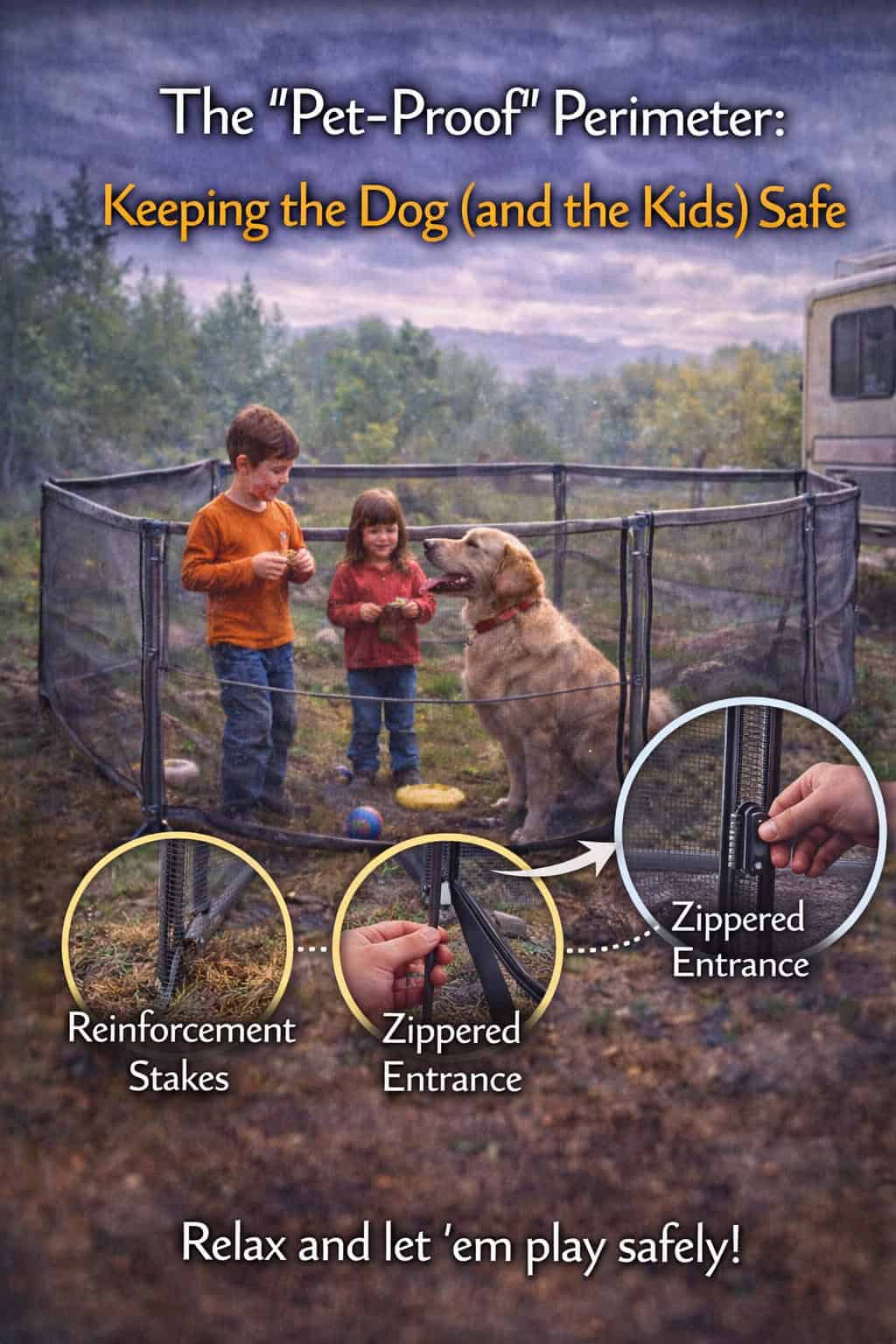
The Science of the "Invisible Backyard"
You’ve finally arrived, unhooked the truck, and opened the RV door. Your dog is wagging its tail, and the kids are ready to jump out and explore. But wait—where does your "yard" end and the neighbor’s "kitchen" begin? Or worse, is that a busy road right behind your site?
In the camping world, we call this the Perimeter. It’s the "edge" of your campsite. Finding a site with a good perimeter is the best way to keep your family safe and relaxed. Here is the "Smart Scout" guide to finding a "Natural Fence."
1. The "Invisible Line" (The Social Boundary)
Dogs and kids don't always understand maps. If a campsite is just a big open field, they might wander right into the next site while someone is trying to eat dinner!
-
The Science: Humans and animals feel more comfortable when they know where their "space" is.
-
The Solution: Look for sites with Physical Borders.
-
The Scout Strategy: Use CampgroundViews.com to find sites with "Natural Walls"—like a row of thick bushes, a large boulder, or a line of trees. These act like a "Keep Out" sign that keeps your dog in your yard and the neighbors in theirs.
2. The "Green Wall" (Natural Fencing)
A site with "Soft Edges" (bushes and plants) is like a free playroom for your family.
-
The Physics: Thick bushes don't just look pretty; they act as a Sound and Sight Buffer. If your dog can’t see the neighbor’s cat through the bushes, he won't bark at it all day!
-
The Safety Hack: A "Green Wall" also keeps balls and toys from rolling into the street. It’s a natural safety net for the kids.
3. The "Cliff-Hanger" Warning
Sometimes the most beautiful sites are the most stressful for parents.
-
The Danger: A site right on a lake or a high ridge looks amazing in photos. But in real life, it might have a Drop-Off or a steep cliff.
-
The Parent Stress-Test: If you have a toddler or a curious puppy, a "Cliff Site" means you have to watch them every single second.
-
The Visual Hunt: Use the 360-degree tour to "spin" around the back of the site. Is there a safe, flat "Backyard," or does the ground disappear into a creek? Pick the flat site for a "Stress-Free" Saturday.
4. The "Traffic Buffer" (The Safety Gap)
The "Edge" of your site shouldn't be the edge of the road.
-
The Science: You want a Buffer Zone. This is the space between where you sit and where cars drive.
-
The Scout Strategy: Look for "Deep Sites" where the picnic table is far away from the pavement.
-
The Visual Hunt: Use the virtual tour to "walk" from the road to the campfire. If you have to take 20 steps to get there, you’ve found a great "Safety Gap" that keeps the kids far away from moving tires.
Pro Tip: The "Tie-Out" Test. Before you let the dog out, look for a sturdy tree or a heavy picnic table in the "Center" of your site. If you use a long leash (a tie-out), make sure it’s short enough that the dog stays in your "Green Wall" and can't reach the road or the neighbor's power cord!
Final Thoughts
Finding a "Pet-Proof" site is all about looking at the Edges. By choosing a site with natural bushes, flat ground, and a good gap from the road, you can stop worrying about "The Great Escape" and start enjoying the campfire.
Safe Scouting, Captain!
🐟 Want to find a "Fenced-In" site? Don't guess where the bushes are! CampgroundViews.com lets you virtually "Stand" in the site so you can see exactly what is on the edges. Find the "Natural Backyards" and the safe, flat gems before you unhook.
Find your "Family-Safe" site at CampgroundViews.com!