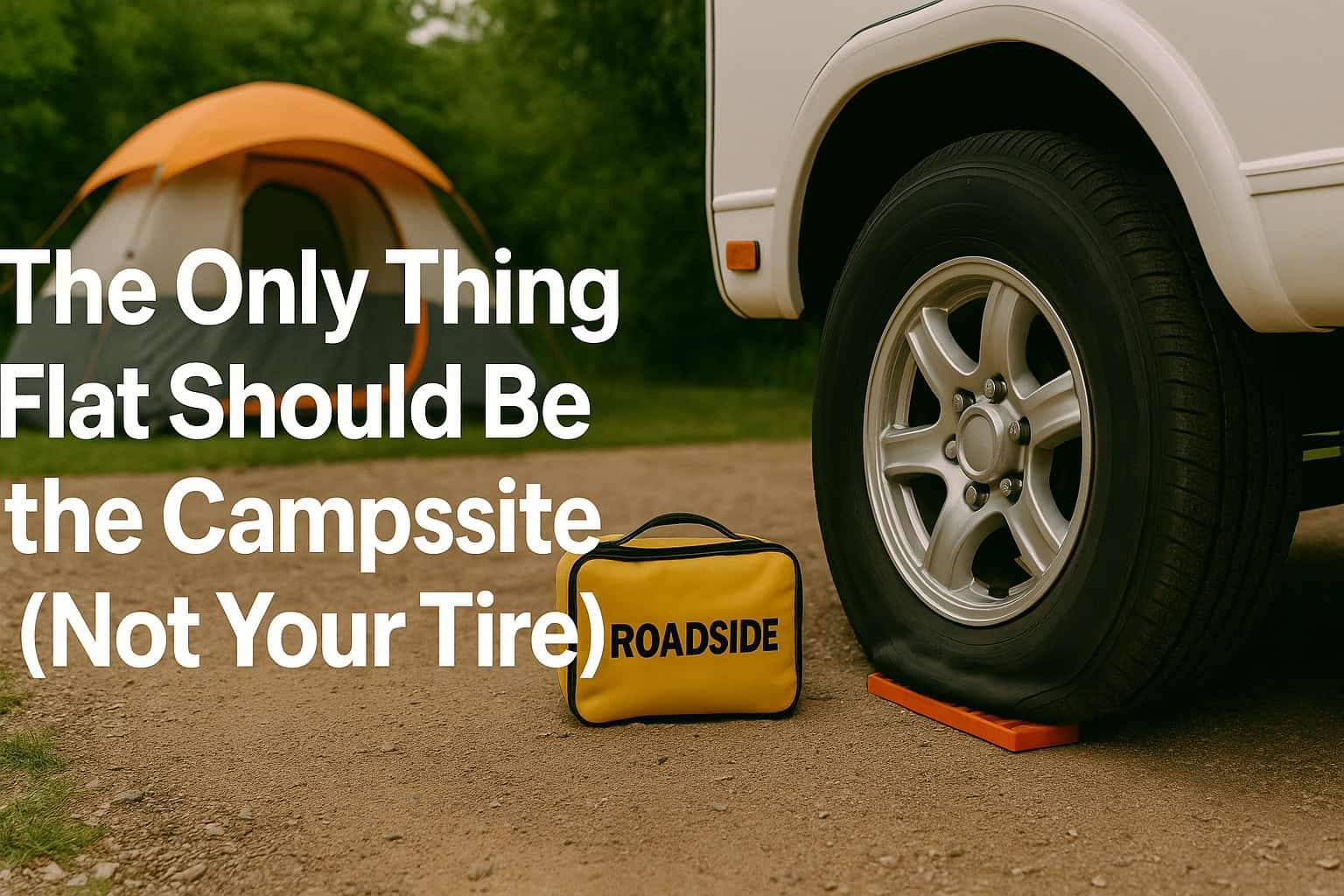
(Because a blown tire isn’t part of the scenic route.)
You’re rolling into that perfect boondocking spot.
The sun is golden. The trees are swaying.
Then—thump-thump-thump.
You pull over, step out… and there it is: a tire flatter than your post-lunch energy.
Welcome to one of the most avoidable RV headaches.
Because while campsite terrain should be level, your tires?
They better be anything but flat.
Let’s walk through the flat-fighting essentials—because nobody wants to swap a tire in the middle of nowhere with one bar of signal and a squirrel for moral support.
🔧 1. Pre-Trip Pressure Checks: Boring, But Brilliant
If you skip everything else, don’t skip this.
-
Use a digital tire pressure gauge (not the one you found in your glove box in 2012)
-
Check before you drive, not mid-trip when tires are hot
-
Follow manufacturer PSI—not your best guess
-
Don’t forget the spare (because it counts most when you forget it)
🎯 Low pressure = heat buildup = blowouts. And blowouts = tears. Yours.
📆 2. Tire Age Matters More Than Tread
RV tires often look fine.
But rubber degrades—even if you barely drive.
-
Replace every 5–7 years, even if the tread says otherwise
-
Check for cracking, bulges, or dry rot
-
Date of manufacture is on the sidewall—look for the 4-digit DOT code
🧠 RV tires die of age, not mileage. Don’t let them retire on your watch.
🧯 3. Don’t Overload (Your Tires Know)
We get it—you’ve got a rig full of dreams, gear, and a backup Blackstone.
But if you’re over GVWR, your tires are begging for mercy.
-
Weigh your rig (CAT scales, RV-specific weigh stations)
-
Distribute weight evenly—left vs. right, front vs. rear
-
Know your load ratings and stay under them
🎯 An overloaded rig stresses tires, suspension, brakes… and your vacation.
🧰 4. Have a Flat-Fix Plan (Before You’re in the Ditch)
Your best tire insurance? A plan. Before you need it.
-
Carry a tire repair kit (plugs, patches, inflator)
-
Keep a 12V compressor or air tank onboard
-
Have roadside assistance that covers RVs (not just your car)
-
Know how to safely change a tire—or at least fake confidence until help arrives
✨ Bonus: Store emergency contact info in the glovebox and your phone.
🧠 5. Tire Covers Are Cheap Insurance
UV rays age tires fast.
If you’re parked for days, weeks, or months—cover up.
-
Use basic vinyl tire covers
-
Park on rubber mats if on hot pavement or gravel
-
Check air before moving again
🎯 A few minutes of prevention = hundreds of dollars (and one ruined trip) saved.
💬 Final Thoughts
Flat campsites are great.
Flat tires? Not so much.
So if you want to roll in like a pro and not limp in like a cautionary tale—treat your tires like your trip depends on them.
Because it does.
🐟 Want to check road conditions before you bounce your way to a blowout?
Use Campground Views to preview routes, terrain, and site access—so your tires (and nerves) stay intact.
🔗 Follow us for more RV safety tips, campsite prep hacks, and gear that keeps you rolling—not waiting for a tow truck with a squirrel-sized audience.