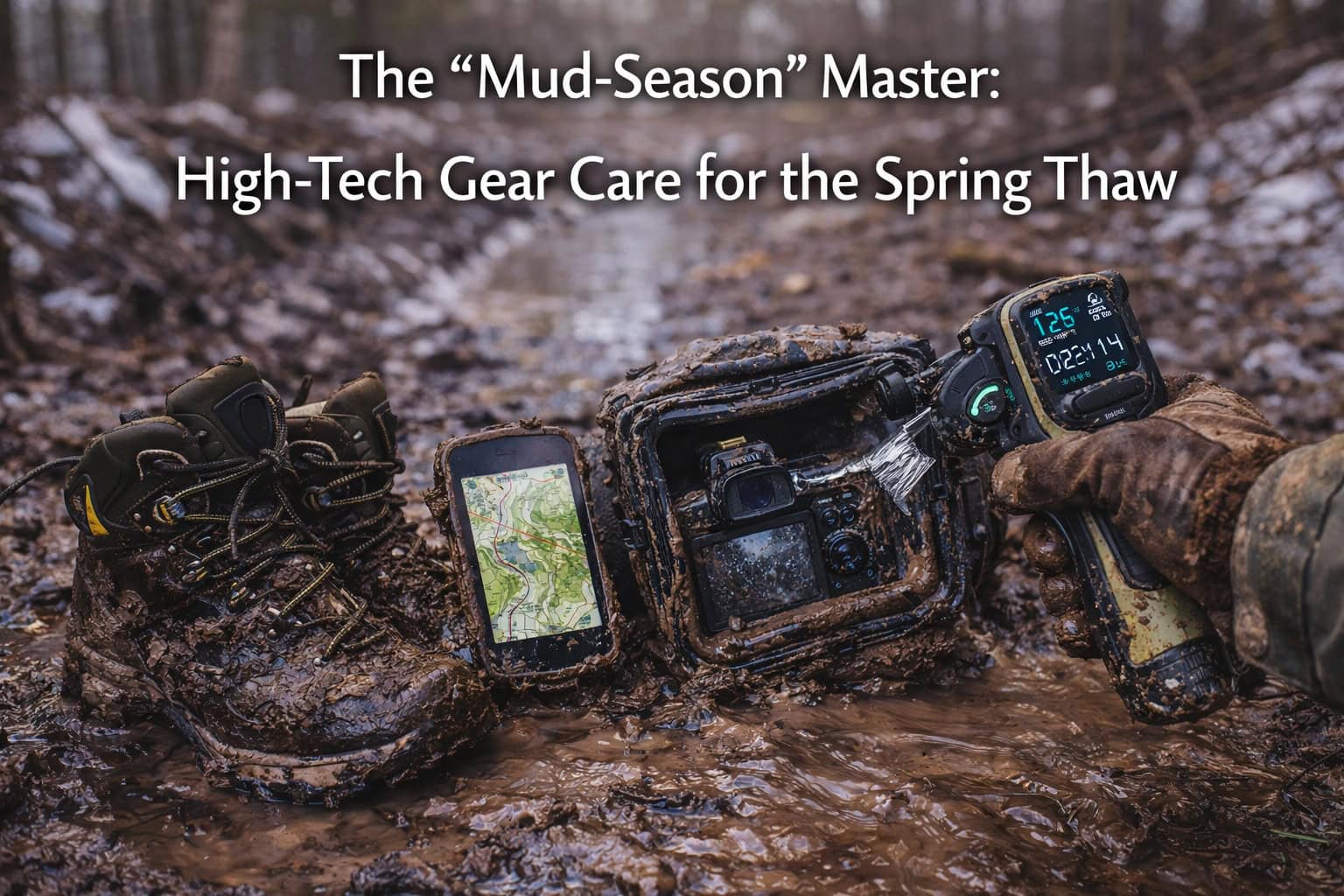
It’s last week of March if you’ve stepped outside this morning, you know the score. The birds are singing, but the ground is screaming. We are in the thick of the "Great Thaw," and your high-end outdoor gear—the $600 shells, the carbon-fiber poles, and the "Artemis-inspired" boots—currently looks like it lost a wrestling match with a chocolate milkshake.
Mud isn't just "dirty water." In the world of high-performance gear, mud is a mechanical abrasive and a chemical clogger. If you let it sit, it will eat your gear's performance from the inside out.
Here is how to be a "Mud-Season Master" and ensure your 2026 kit survives until the summer sun arrives.
1. The "Pore-Clogging" Problem
High-tech waterproof/breathable membranes (like GORE-TEX or eVent) work because they have billions of microscopic pores that are small enough to keep water out but large enough to let sweat vapor escape.
The Mud Factor: Spring mud is full of fine silt and organic matter. When mud dries on your jacket, these tiny particles wedge themselves into those pores.
-
The Result: Your jacket stops "breathing." You’ll stay dry from the rain, but you’ll be soaked from your own sweat within twenty minutes of hiking.
-
The Master Move: Don't just "brush it off." Use a dedicated technical wash (like Nikwax or Granger's). Standard laundry detergents contain surfactants and perfumes that actually attract water, killing the "beading" effect of your gear.
2. Reviving the "Bead" (The DWR Heat Trick)
If you notice that water is "wetting out" (soaking into the fabric) rather than forming beads and rolling off, your DWR (Durable Water Repellent) coating is compromised. Mud is the #1 killer of DWR.
The Master Move: After washing your technical shells with a tech-wash, put them in the dryer on low to medium heat for 20 minutes. The heat helps the tiny "hairs" of the DWR coating stand back up, restoring that factory-fresh water-beading performance.
3. The "Seized" Pole Syndrome
Spring is the time of year when trekking poles mysteriously "lock up." This is caused by a combination of winter salt (from roadside trailheads) and spring silt getting into the telescoping joints.
-
The Master Move: Disassemble your poles completely after a muddy hike. Rinse the sections with fresh water and let them air dry completely before reassembling.
-
Warning: Never use oil or WD-40 on the inside of your trekking poles. It will attract more grit and eventually cause the locking mechanism to slip.
The Gear "Detox" Cheat Sheet
| Gear Type | The "Mud-Season" Enemy | The Master Fix |
| Hardshell Jackets | Clogged pores / Silt | Tech-wash + Low-heat tumble dry. |
| Waterproof Boots | Salt & Organic rot | Soft brush + Cool water (No direct heat!). |
| Trekking Poles | Joint seizure / Grit | Full disassembly + Air dry. |
| Tents | Mildew from wet packing | The "Living Room Pitch" (Dry it within 24 hours). |
4. The "Silt" Scan: Protecting Your Rig
If you’re a "Sky-Link" Hero or a "Sun-Powered Kitchen" enthusiast, mud is also an enemy of your electronics. Fine silt can work its way into USB-C ports and solar panel hinges.
The Master Move: Use a small can of compressed air to blow out your ports after a weekend in the spring thaw. For solar panels, a simple wipe with a microfiber cloth and distilled water is the only way to keep your "Sun-Powered" efficiency at $100\%$.
Don't Let the Mud Follow You Home
Being a "Mud-Season Master" starts before you even pull out of your driveway. The best way to keep your gear clean is to avoid the "muck-traps" entirely. In late March, a campsite that looks like a lush meadow on a flat map is likely a six-inch deep bog in reality.
Before you head out into the spring thaw, use CampgroundViews to scout your site. Their 360-degree virtual tours let you see the ground surface. You can hunt for sites with gravel pads or high-elevation drainage, ensuring you spend your weekend enjoying the view instead of scrubbing silt off your floor mats.
Click here to scout for a "High-and-Dry" site with the Best Camping Tool Ever!