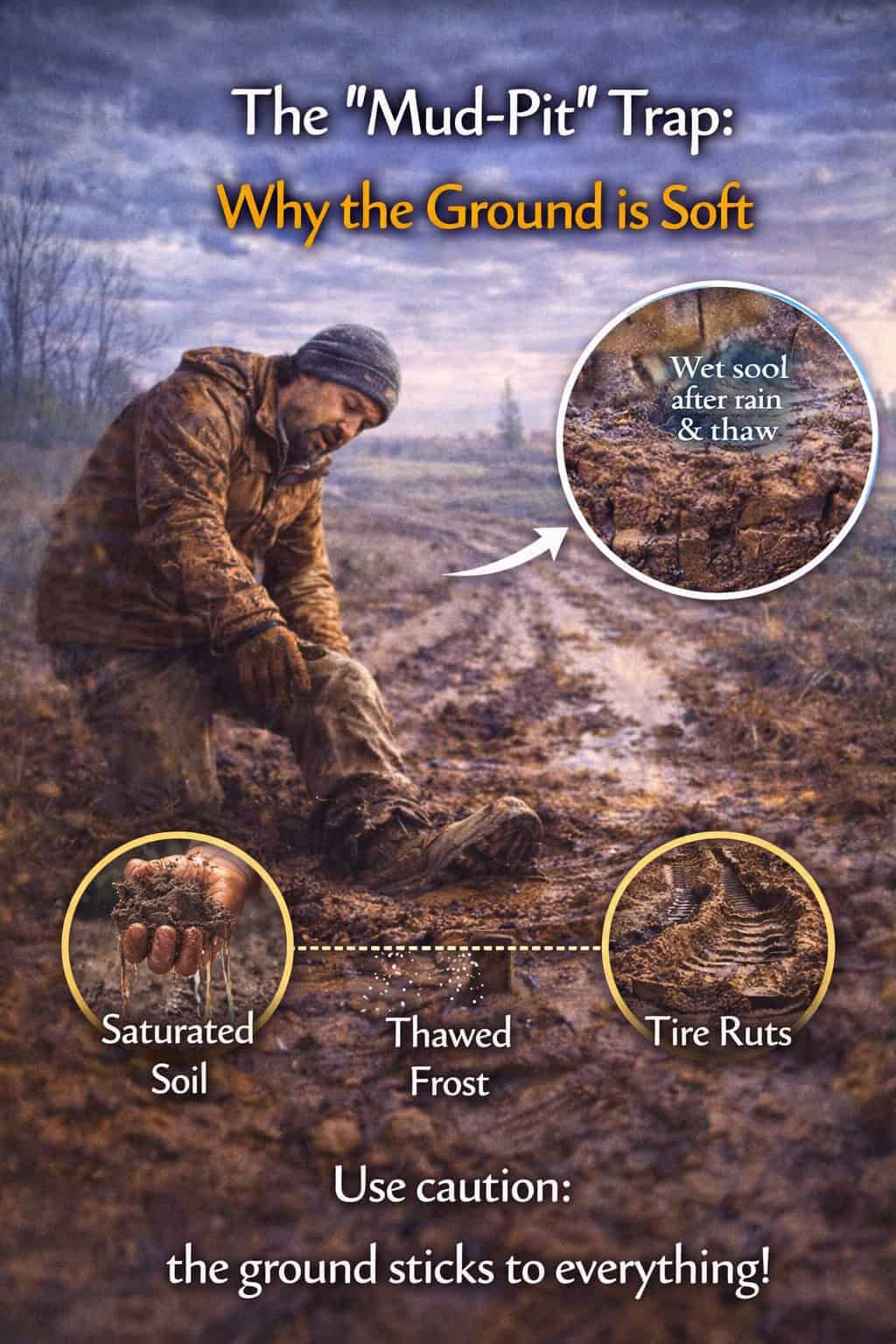
The Science of the Great Spring Melt
You’ve finally made it to your Spring Break campsite! The sun is shining, the birds are singing, and the grass looks like a beautiful green carpet. You start to back your RV in, and suddenly—SQUELCH. Your tires sink 4 inches into the ground. You aren't moving, and your shiny rig is now stuck in what looks like a giant bowl of chocolate pudding.
Welcome to the "Mud-Pit" Trap. In March, the ground is playing a trick on you. Here is the "Smart Scout" guide to why the earth turns into a sponge and how to stay on solid ground.
1. The "Ice Lid" (The Spring Thaw)
During the winter, the ground freezes solid like a giant ice cube. In March, the sun starts to warm up the surface, but the deep ground is still frozen solid.
-
The Science: The top 2 inches of dirt melt into water, but that water has nowhere to go! It can't soak into the ground because the frozen dirt underneath acts like a "lid" or a concrete floor.
-
The Result: The water gets trapped in the top layer of soil, turning the grass and dirt into a Saturated Sponge. It might look solid on top, but underneath, it’s all liquid.
2. The "Sinking Brick" Physics
Your RV is incredibly heavy. Even a small trailer can weigh 5,000 pounds, and big motorhomes can weigh over 20,000 pounds.
-
The Math: All that weight is resting on just four or six small patches of rubber (your tires).
-
The Pressure: When you park on soft March mud, the weight of the RV pushes down harder than the muddy ground can push back.
-
The Physics: It’s like trying to walk across a cake wearing high heels instead of snowshoes. You’re going to sink straight to the bottom!
3. The "CV Scout" Strategy: Finding Hard Ground
You can avoid the "Mud-Pit" entirely by checking the "Foundation" of your site before you book.
-
The Visual Hunt: Use the 360-degree tour on CampgroundViews.com to look at the Pad Material.
-
The Strategy: * Paved/Concrete: This is the "Gold Standard" for March. It won't sink, no matter how much it rains.
-
Gravel: Gravel is like a "drainage system." It lets the water slip through the cracks so the surface stays much firmer than dirt.
-
Grass/Dirt: In March, these are "Red Zones." If a site is just grass, be very careful!
-
4. The "High Ground" Advantage
Water always follows gravity. If a campsite is at the bottom of a hill, all the melted snow and rain from the whole park will end up right under your tires.
-
The Scout Secret: Look for sites that are slightly "humped" or higher than the road.
-
The Visual Hunt: Use the virtual tour to "spin" around the site. Does the ground slope away from the parking pad? If the water can run off into the woods, your site will be much drier and safer for your heavy rig.
Pro Tip: The "Board" Backup. In March, always carry a few flat wooden boards or plastic "Leveling Blocks." If you have to park on a softer surface, putting these under your tires and jacks spreads the weight out (like a snowshoe), which helps keep you from sinking into the pudding!
Final Thoughts
March is a "messy" month, but it’s a great time to beat the summer crowds. By using your scouting skills to find the gravel pads and the high ground, you can keep your RV on top of the world instead of stuck in the mud.
Stay high and dry, Captain!
🐟 Want to find a "Mud-Free" site for your trip? Don't take a chance on a grass pad this spring! CampgroundViews.com lets you virtually "Step" onto the site so you can see if it’s paved, gravel, or dirt. Find the "Solid-Ground" gems before you get stuck.
Find your "Solid-Ground" site at CampgroundViews.com!