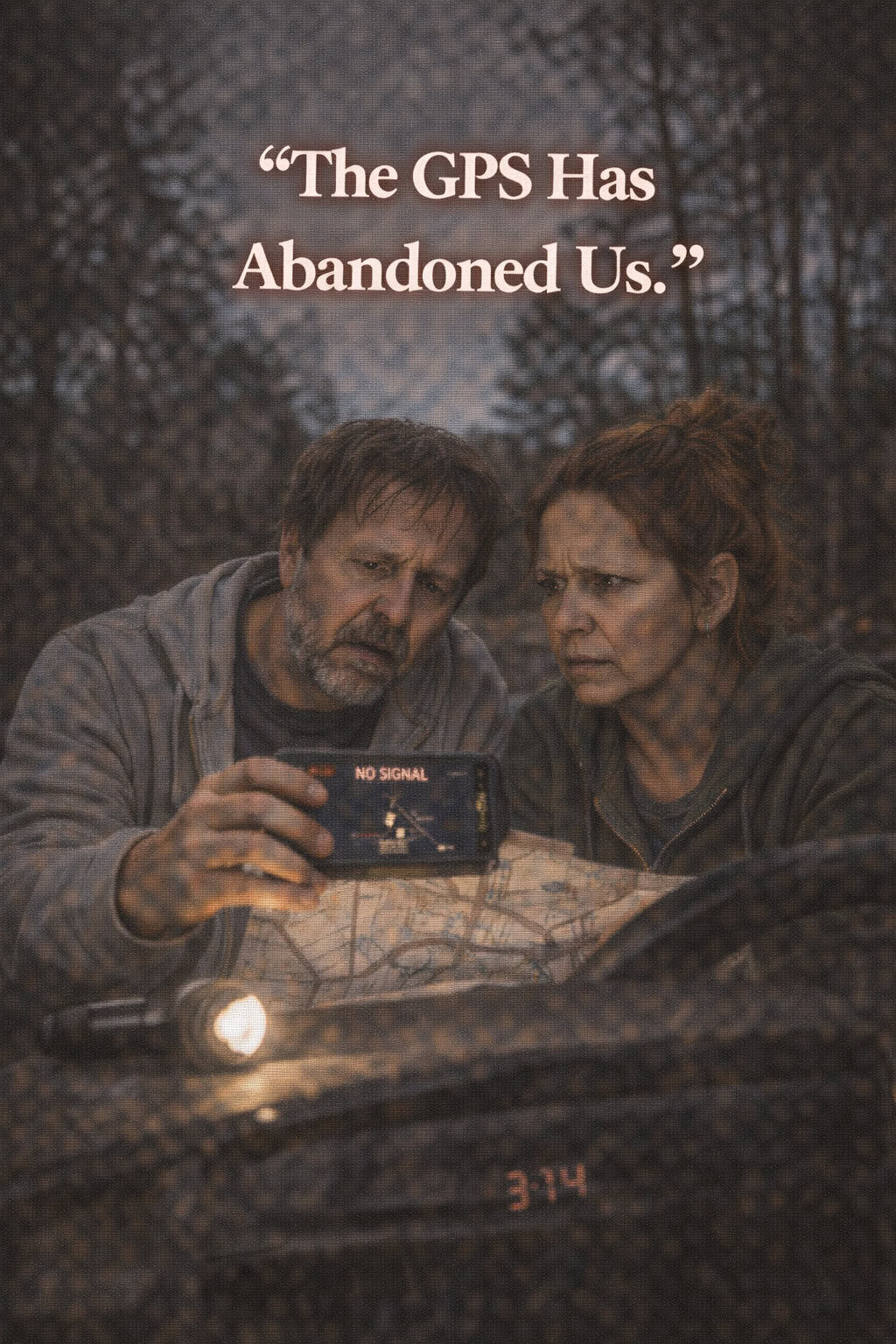
(Not rerouted. Not recalculating. Just… gone.)
It spoke with confidence at first.
Clear directions. Calm tone. Authority.
Then the road narrowed.
The signal faded.
And suddenly—silence.
No warning.
No apology.
Just a blue dot floating in uncertainty.
The GPS has abandoned us. And now we must rely on instincts we have not used in years.
📡 1. It Didn’t Fail Dramatically — It Just Stopped Caring
There was no error message.
No “signal lost” drama.
It simply:
-
froze
-
lagged
-
stopped updating
-
or confidently pointed you forward with no context
This is the most unsettling kind of abandonment.
🧭 2. You Immediately Question Every Turn
Without GPS, every decision becomes suspicious.
You ask:
-
“Does this feel right?”
-
“Did the map say left or was that earlier?”
-
“Is this still a road?”
You’re not lost yet.
But you are no longer sure.
🗺 3. The Paper Map Is Theoretically Helpful
You remember you brought a map.
You unfold it and realise:
-
it’s enormous
-
not to scale emotionally
-
and requires interpretation skills you do not possess
You rotate it three times.
You point at it confidently.
No one believes you.
🚐 4. The RV Makes This Feel More Serious
Being lost in a car is inconvenient.
Being unsure in an RV is:
-
heavier
-
slower
-
and far more committal
You can’t just “pop down that road” without consequences.
Every wrong turn feels like a decision with paperwork.
🌲 5. The Road Keeps Going (Which Is Not Reassuring)
If the road ended, that would help.
But it doesn’t.
It continues confidently through:
-
trees
-
bends
-
areas that feel increasingly private
You are still moving, which suggests legality.
But comfort has left the conversation.
🧠 6. Everyone Gets Very Quiet
This is the universal sign.
The radio goes off.
The talking stops.
All attention is on the road and the vague hope of signage.
Silence does not solve the problem.
But it feels respectful.
📱 7. Signal Returns at the Most Emotionally Inconvenient Moment
Just as you:
-
commit to a turn
-
make peace with being wrong
-
or start narrating a backup plan
The GPS comes back.
Calm. Casual. Unbothered.
“Turn around when possible.”
No acknowledgment.
No accountability.
😅 8. You Will Laugh About This Later (Briefly)
Once you’re back on track, you’ll say: “That was weird.”
You will not fully unpack:
-
the tension
-
the calculations
-
the trust issues
Because you’re moving again.
And movement heals.
💬 Final Thoughts
The GPS abandoning you doesn’t mean you failed.
It means you were briefly reminded that navigation is a skill—and technology is a convenience, not a guarantee.
You slowed down.
You paid attention.
You figured it out.
And next time?
You’ll download the map offline.
Probably.
🐟 Want fewer “where are we?” moments on arrival? Use Campground Views to preview access roads, turns, and approach conditions before you go—so even if the GPS ghosts you, you’ve got a plan.
🔗 Follow us for more RV life truths, route-planning humour, and content for people who’ve absolutely said, “It said turn back there,” five seconds too late.