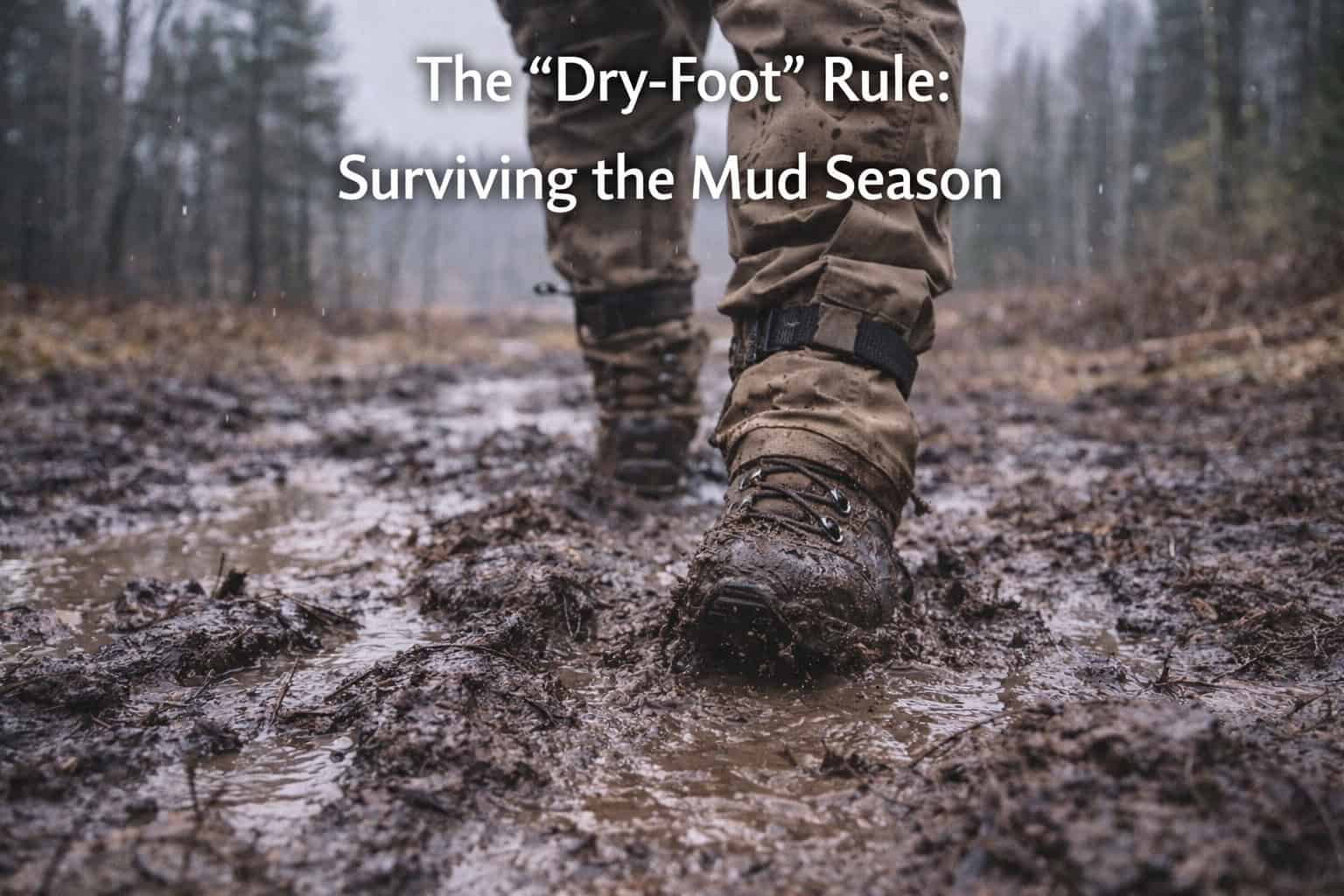
The "Dry-Foot" Rule: Surviving the Mud Season
It’s late March. The birds are singing, the sun is finally sticking around past 6:00 PM, and the "Great Thaw" is officially underway. But beneath that beautiful spring sunshine lies the hiker's greatest nemesis: The Sponge.
In the outdoor world, we call this "Shoulder Season," but let’s be honest—it’s Mud Season. Between the melting snowpack and the classic "April showers" arriving a week early, your favorite trails have turned into a literal quagmire. One wrong step and you aren't just hiking; you're auditioning for a swamp-monster movie.
The "Dry-Foot" Rule is simple: If your feet get wet, your morale (and your skin) will follow. Here is how to navigate the muck without losing your boots—or your sanity.
1. The Cardinal Sin: "The Puddle Dodge"
We’ve all done it. You see a massive, chocolate-milk-colored puddle taking up the whole trail, and your instinct is to hop onto the edge to stay dry.
Don't do it. This is how "Social Trails" are born. By walking on the edges, you trample delicate spring shoots and widen the trail, leading to erosion that takes years to fix.
-
The Scout Move: If you're on the trail, walk through the mud. * The Mindset: Embrace the mess. If you're geared up correctly, a 3-inch puddle is just a minor obstacle, not a day-ruiner.
2. The $10 "Gaiter" Trick
Even the most expensive GORE-TEX boots have a fatal flaw: a giant hole at the top where your leg goes in. In mud season, splashes and "over-topping" are your biggest threats.
The Fix: Lightweight, breathable Gaiters. These fabric "sleeves" seal the gap between your pants and your boots. They turn your footwear into a sealed system, allowing you to stride through slush and muck without a single drop reaching your socks.
3. The Post-Hike "Detox"
Mud isn't just dirt and water; it’s abrasive. As it dries, it sucks the moisture out of leather and grinds away at the waterproof membranes of synthetic shoes.
-
Never let mud dry on your boots. Once you get to the trailhead or your rig, knock off the big chunks.
-
The Gentle Clean: Use a soft brush and plain water. Avoid harsh detergents that can strip the factory-applied Durable Water Repellent (DWR) coating.
-
Air Dry Only: Never put your boots next to a heater or a campfire to "speed things up." High heat can crack leather and melt the adhesives holding your soles together.
The Mud-Season Gear Audit
4. The Campground "Drainage" Check
There is nothing worse than arriving at your site at 8:00 PM, stepping out of the car, and realizing your "perfect" spot is at the bottom of a literal basin. When the snow melts, water follows the path of least resistance—and sometimes that path leads directly through your tent pad.
Pro-Tip: In late March, avoid the "scenic" low-lying meadows. They are beautiful in June, but in March, they are basically bogs. Look for sites on a slight elevation or with gravel pads.
Don't Guess the Drainage—Scout it First
The "Dry-Foot" Rule applies to your campsite just as much as the trail. You don't want to spend your weekend digging trenches around your rig or hopping over "Lake Campsite" to get to your grill.
Before you head out into the spring thaw, use CampgroundViews to see exactly what you're getting into. Their 360-degree virtual tours let you see the "lay of the land." You can check the slope of the site, see if the pad is gravel or dirt (mud!), and ensure you're parking on high ground.
Click here to scout for a high-and-dry site with the Best Camping Tool Ever!