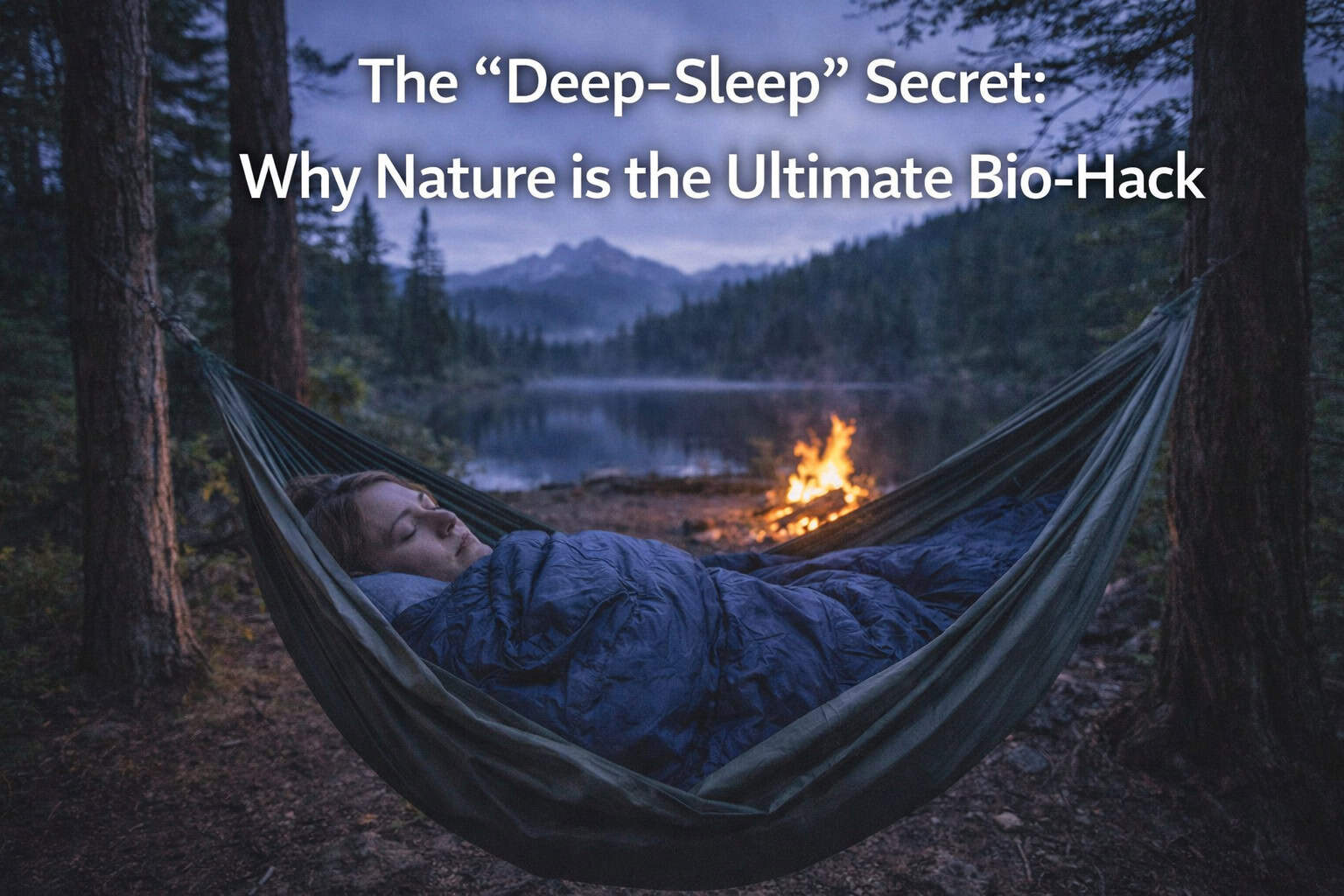
We live in an age of sleep optimization. We wear rings that track our REM cycles, we supplement with magnesium and melatonin, and we invest in "cooling mattresses" that cost as much as a used car. Yet, despite all the gadgets, we’re more exhausted than ever.
The secret to the best sleep of your life isn't found in a laboratory or a tech startup's whitepaper. It’s a "bio-hack" that's been around for roughly 200,000 years: Sleeping outside.
There’s a reason you feel a unique, heavy-lidded kind of tired after a day in the woods—and a profound, "where-am-I" level of refreshment when you wake up. Here is why nature is the ultimate performance enhancer for your brain’s nightly reboot.
1. The Circadian Reset
Your body operates on a 24-hour internal clock (the circadian rhythm) that is governed by light. In our modern lives, we are "light-starved" during the day (sitting in dim offices) and "light-overdosed" at night (staring at LED screens).
When you camp, you're exposed to the full spectrum of natural sunlight, which is significantly brighter than indoor lighting—even on a cloudy day. This "anchors" your circadian rhythm.
-
Morning: Blue-spectrum sunlight suppresses melatonin and spikes cortisol, telling your brain it's time to perform.
-
Evening: The absence of artificial light allows your natural melatonin production to begin hours earlier than it would at home.
The result? You don’t just fall asleep faster; you fall into a deeper, more synchronized sleep.
2. Natural "Pink Noise" vs. Artificial White Noise
While many of us use white noise machines to drown out city traffic, nature provides something even better: Pink Noise. Unlike white noise, which has equal intensity across all frequencies, pink noise (like rustling leaves, steady rain, or a flowing stream) has more power at lower frequencies. Studies suggest that listening to these natural steady-state sounds can actually increase stable deep sleep and improve memory retention by synchronizing your brain waves.
3. The Thermoregulation Advantage
Your body temperature needs to drop by about to to initiate and stay in deep sleep. Modern homes are often kept at a static, warm temperature that fights against this natural process.
In the wild, the ambient temperature naturally drops after sunset. This external cooling mimics your body’s internal needs, "tricking" your system into a deeper state of hibernation.
Indoor vs. Outdoor: The Sleep Audit
Nature Isn't a Luxury—It's a Biological Necessity
Bio-hacking often feels like trying to outsmart nature. But the most effective hack is simply returning to it. A single weekend spent under the stars can reset a month’s worth of digital-induced insomnia. You aren't just "roughing it"; you're giving your brain the high-fidelity recovery it was designed for.
Don't Let a Bad Campsite Ruin Your Best Night's Sleep
The "Deep-Sleep" secret only works if you actually feel safe and comfortable in your environment. There is nothing "restorative" about realizing your tent is pitched on a 15-degree slope or right next to a noisy generator.
Before you head out to reclaim your REM cycles, use CampgroundViews to scout your site. Their 360-degree virtual tours allow you to see exactly where you'll be sleeping. You can pick the quietest, flattest, and most secluded spot in the park, ensuring your "bio-hack" isn't interrupted by a bad view or a rocky patch of ground.
Click here to find your perfect sleep sanctuary with the Best Camping Tool Ever!