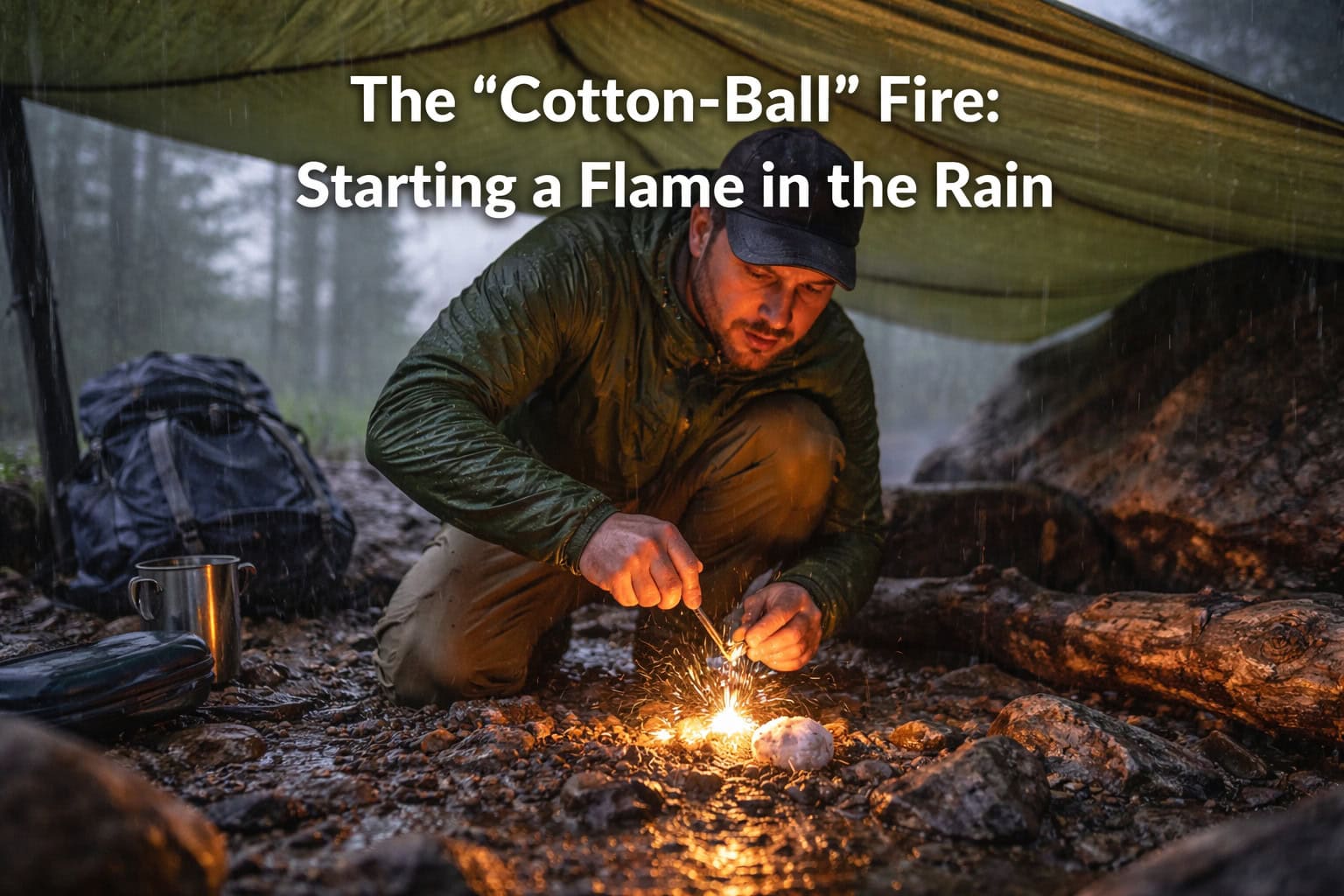
The Chemistry of the Ultimate Spark
You’re out in the woods, the sky is grey, and it’s been drizzling for hours. You need a fire for warmth, but every stick you touch feels like a wet noodle. You strike a match, it flickers for a second, and then—poof—it’s out.
This is where most people give up, but a Smart Scout knows that fire isn't just about wood; it’s about Chemistry. Here is how to turn a common bathroom item into a "Fire-Rocket" that can beat a March rainstorm.
1. Why Wet Wood Hates You (The Energy Battle)
To get a fire started, you need three things: Heat, Oxygen, and Fuel. This is called the Fire Triangle.
-
The Problem: When wood is wet, it’s not just "dirty." It’s actually holding a lot of water.
-
The Physics: Before the wood can catch fire, the heat has to turn all that water into steam. This is called the Heat of Vaporization.
-
The Result: Most matches or lighters run out of "juice" before they can finish drying the wood. You need a fuel that burns longer and hotter to win the battle against the water.
2. The "Gooey" Science: Cotton + Petroleum Jelly
This is the ultimate survival hack. Take a standard cotton ball and rub it in a big glob of Petroleum Jelly (like Vaseline).
-
The Chemistry: Petroleum jelly is made of Hydrocarbons. It is a very "Energy-Dense" fuel.
-
The Physics: Cotton acts like a Wick. When you light the cotton, the jelly melts and slowly "feeds" the flame.
-
The Math: A plain cotton ball burns in about 10 seconds. A jelly-soaked cotton ball can burn for 5 to 10 minutes! * The Equation: In a simplified form, the combustion looks like this:
$$Fuel + O_2 \rightarrow CO_2 + H_2O + Heat$$
3. The "Scout" Strategy: Finding "Bone-Dry" Wood
Even with a "Fire-Rocket," you can’t just light a wet log. You need to find wood that stayed dry during the storm.
-
The Visual Hunt: Use CampgroundViews.com to look for Evergreen Trees (like Pine or Cedar) near your site.
-
The Trick: Look at the bottom branches of a thick pine tree. These branches are often dead and have been shielded from the rain by the "umbrella" of needles above them. They are usually "Bone-Dry" and ready to snap!
-
The Pro-Tip: Look for "Standing Dead" wood—sticks that are caught in bushes and not touching the wet ground.
4. The "Emergency Kit" Setup
A Smart Scout never leaves camp without a Fire-Kit.
-
The Gear: Get a small plastic baggie or a clean pill bottle.
-
The Setup: Stuff 5 or 6 "Fire-Rockets" inside. Since petroleum jelly is waterproof, these will stay ready to use even if you fall into a creek!
-
The Strategy: Use the virtual tour to find your Fire Pit location. If the pit is in a "bowl" where water collects, you’ll need extra rockets to dry out the ground before your fire can grow.
Smart Scout Secret: If it’s really pouring, build your fire in a "Lean-To" shape. Lean your dry sticks against a larger log. This creates a "roof" that protects your "Fire-Rocket" from the raindrops while it does the hard work of drying out your kindling!
Final Thoughts
Survival is about using your brain to beat the elements. By understanding the chemistry of fuel and the physics of heat, you can turn a wet, shivering afternoon into a cozy night by the fire.
Stay warm, Captain!
🐟 Want to find a "Weather-Ready" site? Don't get stuck in a flood zone! CampgroundViews.com lets you virtually "Explore" the park so you can see which sites have high ground and thick tree cover to protect you from the rain. Find your "Safe-Haven" gems before the clouds move in.
Find your "Storm-Proof" sanctuary at CampgroundViews.com!