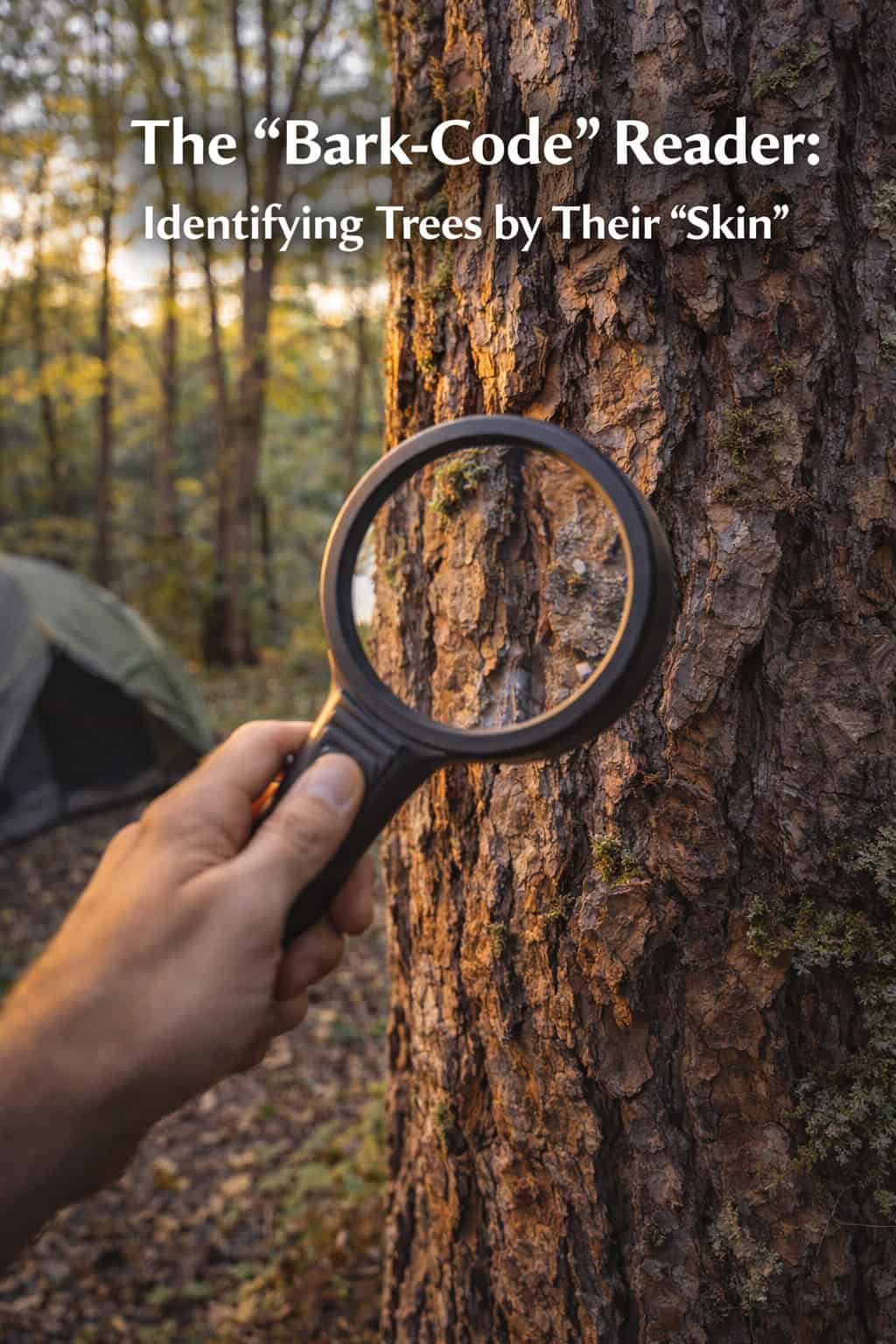
Cracking the Secret Texture of the Forest
When you’re walking through a thick forest, all the leaves are way up in the "canopy"—so high that they all start to look like a giant green blur. If you want to know what kind of tree you’re standing next to, you can’t always look at the leaves. You have to look at the Bark.
Think of bark as a tree’s "Bark-Code." Just like a grocery store scanner reads the black and white lines on a cereal box, you can "read" the patterns, colors, and textures of a tree’s skin to figure out its name. Here is how to become a Master Bark-Coder.
1. The "Camouflage" Code (The Sycamore)
The Look: This tree looks like it’s wearing a soldier’s uniform from a movie. The bark is patchy, with pieces of white, tan, and green all mixed together.
-
The Science: Sycamores grow very fast. Their old bark isn't stretchy enough to keep up with the wood growing underneath, so it "exfoliates" (peels off) in big chunks to show the new, white skin underneath.
-
The ID Tip: If it looks like a "Puzzle Tree" or a piece of camo gear, it’s likely a Sycamore.
2. The "Deep Canyon" Code (The Cottonwood)
The Look: This bark is thick, rugged, and has deep "valleys" running up and down the trunk. It feels like rough, dry armor.
-
The Science: These deep ridges are called Furrows. Cottonwoods live near water and grow big and sturdy. The thick bark protects the tree from forest fires and keeps the "sap" inside from drying out in the sun.
-
The ID Tip: If you can hide a penny inside the cracks of the bark, you’re looking at a mature Cottonwood or an Oak.
3. The "Paper Trail" Code (The Birch)
The Look: This is the easiest one to spot. The bark is bright white and peels away in thin, curly sheets that look exactly like paper.
-
The Science: Birch bark contains a natural wax called Betulin, which makes it waterproof. In ancient times, people used this "paper" to write messages or even build canoes!
-
The Code Rule: Look, don't peel! Peeling the bark off a living Birch tree is like a human losing a layer of skin—it can let bugs and sickness inside the tree. Only pick up "Paper" that has already fallen on the ground.
4. The "Potato Chip" Code (The Ponderosa Pine)
The Look: If you are in the mountains out West, look for a tree with orange-red bark that looks like it’s made of giant, flat "scales" or potato chips.
-
The Science: The Ponderosa Pine has a secret "scent-code."
-
The Experiment: Put your nose right into one of the deep cracks in the bark and take a big sniff.
-
The Result: It doesn't smell like a tree—it smells like Butterscotch or Vanilla! ---
5. The "Horizonal Line" Code (The Cherry)
The Look: Wild cherry trees have dark, reddish-brown bark that is very shiny.
-
The Science: Look for tiny, horizontal "dashes" or slits in the bark. These are called Lenticels.
-
The Physics: These aren't scratches; they are "Breathing Pores." They allow the tree to swap gases (like oxygen and carbon dioxide) with the air around it. It’s how the tree "breathes" through its skin!
Pro Tip: The "Rubbing" Record. Want to bring the "Bark-Code" home? Take a piece of plain paper and a large crayon. Hold the paper against the tree and rub the crayon sideways over it. The "Code" will appear on your paper like magic! You can keep a "Bark Library" in your RV.
Final Thoughts
Once you learn to read the "Bark-Code," the forest stops being a wall of brown and green. Every tree becomes a "character" with its own history and its own special type of armor. You'll realize that the trees are talking to you—you just had to look at their skin!
Keep your eyes on the trunk, Explorer!
🐟 Want to find a site with a specific "Bark-Code" neighbor? Maybe you want a site with white Birches or a giant, vanilla-smelling Pine! CampgroundViews.com lets you take a 360-degree tour of the park. You can zoom in on the trees right next to the RV pad to see exactly who your "Bark-Neighbors" will be before you arrive.
Pick your favorite tree at CampgroundViews.com!