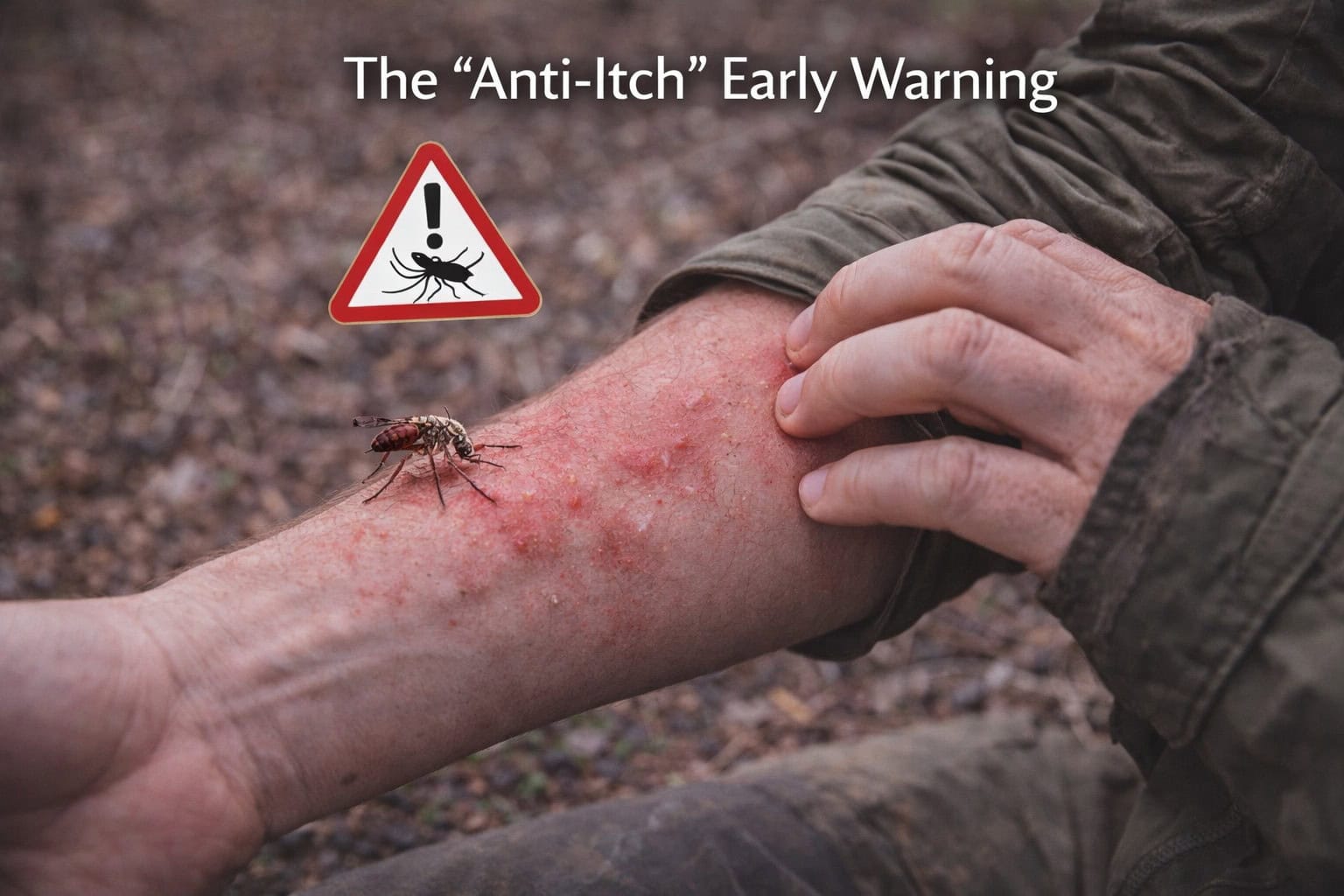
If you think you have a few more weeks before you need to worry about bites, the National Pest Management Association has a wake-up call for you. Thanks to the erratic weather patterns of this past winter—a mix of insulating snow cover and unseasonably warm "thaw" cycles—2026 is officially being called the year of the "Bug Boom."
In much of the country, the bugs didn't just survive the winter; they thrived. As we hit this final week of March, the ground is warming past that critical 45F threshold. That is the "alarm clock" for ticks and early-season mosquitoes.
Here is your early-warning guide to staying itch-free while everyone else is still scratching their ankles.
1. The "Thaw-Point" Reality Check
Ticks don’t wait for summer. In fact, adult black-legged ticks (the ones that carry Lyme) are active the moment the ground isn't frozen. If you are hiking in the Midwest, Northeast, or South Central regions this weekend, they are already "questing"—climbing to the tips of dry grass and waiting for a warm-blooded host to brush by.
-
The Early Warning: If the snow is gone and the mud is soft, the ticks are awake.
-
The "Ghost Mode" Connection: When you’re off-trail looking for that perfect secluded spot, you are entering high-density tick territory. Don't let your "disappearance" from the grid include a hitchhiker.
2. The 2026 "Spatial" Shield
The biggest tech upgrade for 2026 is the Spatial Emanator. Unlike the old-school coils that smelled like a campfire, these new devices (like the BiteBarrier or Guardian units) release a scentless, volatile pyrethroid that creates a 15-foot "no-fly zone" for up to 21 days.
-
The Strategy: Instead of just spraying yourself, hang a spatial emanator on your pack or your camp chair. It fills the "protection gap" that topical sprays miss, preventing the bite before the mosquito even lands.
3. The Dual-Layer Defense: Permethrin + Picaridin
In 2026, the "Gold Standard" for serious scouts isn't DEET; it's the Two-Step Protocol.
-
Layer 1 (The Gear): Treat your boots, socks, and outer pants with Permethrin. This is a contact insecticide that kills ticks on contact. One treatment lasts 6 washes.
-
Layer 2 (The Skin): Use a 20% Picaridin spray on exposed skin. It’s odorless, non-greasy, and—unlike DEET—it won't melt your expensive "Artemis-influence" synthetic gear or your watch face.
The "Anti-Itch" Toolkit: 2026 Edition
| Tool | Why It’s Better | The "Scout" Tip |
| Thermal Pulse Device | Uses heat, not chemicals. | Neutralizes the protein in insect saliva that causes the itch. |
| Hydrocolloid Patches | Prevents scratching & infection. | Put these on immediately after a bite to speed up healing. |
| Lint Roller | The "Tick-Magnet." | Roll your pants after a hike to catch "crawlers" before they attach. |
| Picaridin Lotion | 14-hour protection. | Lasts longer than sprays and offers more even coverage. |
4. The Bio-Hack: Thermal Itch Relief
If you do get bit, skip the messy creams. The 2026 bio-hack of choice is the Thermal Pulse. By applying a concentrated burst of heat $(\approx 120^\circ\text{F})$ to the bite for 3–5 seconds, you break down the anticoagulant enzymes that cause the itching sensation. It’s a 10-second "reset" that stops the itch-scratch cycle before it starts.
Scout the Site, Avoid the Swarm
Mosquitoes and ticks aren't distributed evenly. They cluster. Mosquitoes need standing water (puddles from the "Mud Season"), and ticks need tall, dry "over-wintered" grass.
Before you book your site for the weekend, use CampgroundViews to virtually scout the vegetation. Their 360-degree tours allow you to see the "Tick Havens" before you arrive. You can hunt for sites with mowed grass, gravel pads, and plenty of airflow—the natural enemy of the mosquito. Pick a "High and Dry" site and leave the "Bug Boom" to the unprepared.
Click here to scout for a "Pest-Free" site with the Best Camping Tool Ever!