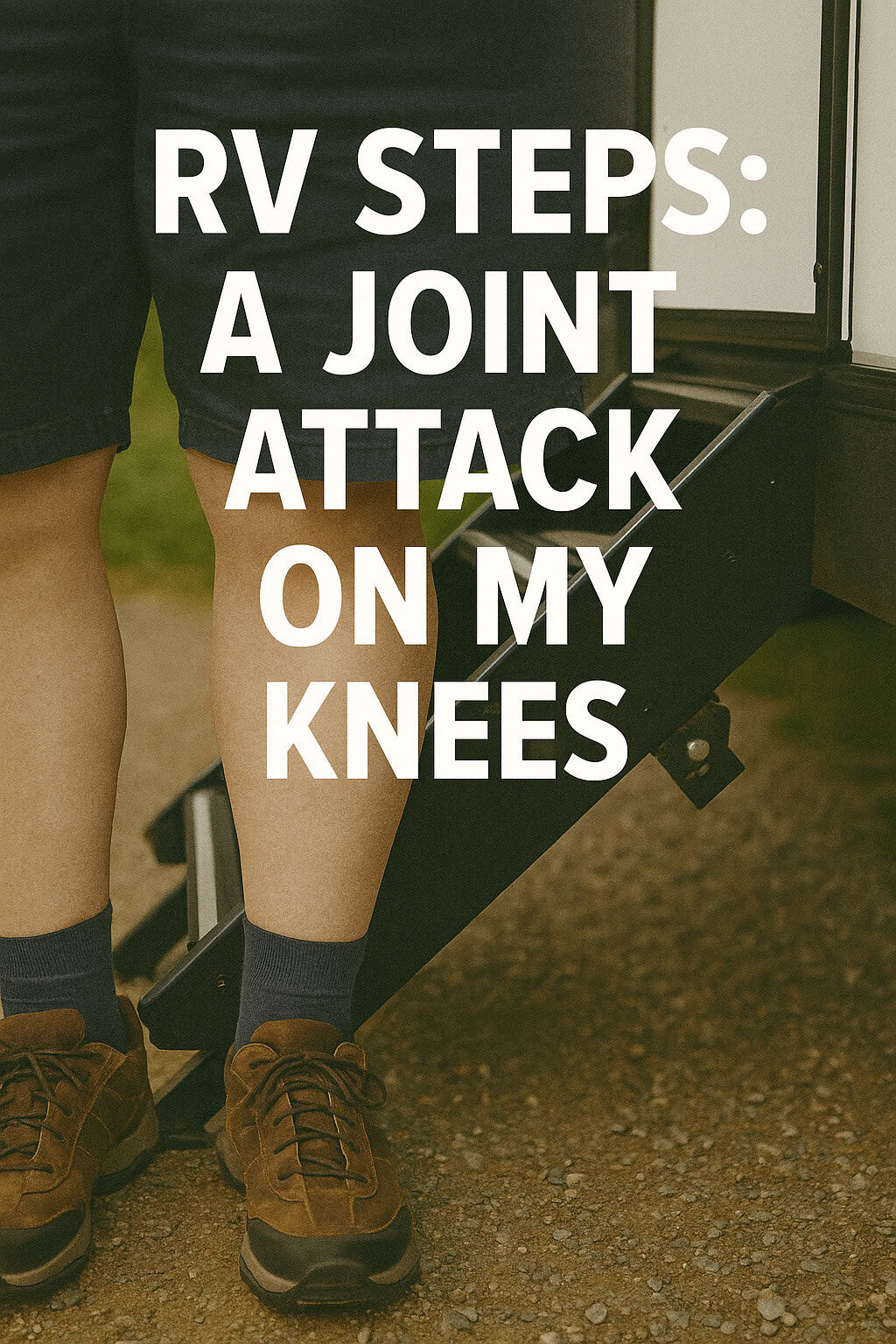
(Because somehow they’re always higher, steeper, and judging you.)
RV steps look innocent.
Compact. Functional. Unassuming.
And yet—every time you use them—they remind you that:
-
gravity is aggressive
-
your knees remember past injuries
-
and “one more trip inside” was a mistake
RV steps aren’t stairs. They’re a test of cartilage and character.
Here’s why they hurt, why they’re always awkward, and why we keep pretending they’re fine.
🦵 1. The First Step Is Always a Leap of Faith
No matter the rig, no matter the site, the first step down is:
-
lower than expected
-
farther than your brain calculated
-
a full commitment
You don’t step.
You drop. Gracefully. Emotionally.
Your knees absorb it all and file a complaint.
📐 2. The Height Changes Depending on the Day
Parked on level ground? Manageable.
Slight slope? Now you’re rock climbing.
RV steps somehow:
-
gain height on uneven sites
-
feel steeper at night
-
become treacherous when you’re carrying something
Same steps. Different trauma.
🧠 3. Your Brain and Body Disagree on the Last Step
Going down:
-
your foot expects ground
-
the ground is not there yet
-
surprise impact
Going up:
-
your knee lifts confidently
-
the step is slightly higher
-
your joint says, “Absolutely not.”
It’s the last step that gets you. It always is.
🧦 4. Footwear Makes It Personal
Barefoot? Regret.
Socks? Slip hazard.
Flip-flops? A gamble.
Boots? Acceptable, but loud.
RV steps are unforgiving surfaces that:
-
don’t care what you’re wearing
-
punish bad traction
-
and make you rethink every footwear choice
You’ll still forget and go down in socks at least once per trip. Tradition demands it.
🌙 5. Night-Time Turns Them Into a Trap
In the dark, RV steps become:
-
invisible
-
misjudged
-
mildly hostile
You know they’re there.
You still misstep.
That’s why every experienced camper:
-
adds step lights
-
carries a torch
-
or moves like they’re disarming a device at 2 a.m.
🧳 6. Carrying Stuff Makes It Worse
RV steps were not designed for:
-
groceries
-
dogs
-
laundry baskets
-
or anything that blocks your view
Now you’re:
-
guessing where the step is
-
leading with your knees
-
hoping your center of gravity stays loyal
This is where most near-misses happen—and where knees lose arguments.
🧎 7. They Get Slippery the Moment It Matters
Rain? Slippery.
Dew? Slippery.
Mud? Absolutely slippery.
RV steps love moisture and hate stability.
One damp morning and suddenly you’re descending like:
-
a cautious penguin
-
with much higher medical bills
Traction mats and non-slip treads exist for a reason. That reason is pain prevention.
🛠 8. We All Eventually Modify Them
No one stays neutral forever.
Sooner or later, you add:
-
a step mat
-
grip tape
-
a handrail
-
an extra portable step
Not because you’re weak—but because you’re done negotiating with your joints.
This is not defeat.
This is optimization.
😅 9. And Still… You’ll Use Them a Hundred Times a Day
Despite everything:
-
sore knees
-
near misses
-
dramatic sighs
You’ll still go in and out of the RV constantly.
Forgot your phone.
Need a snack.
Forgot what you came in for.
Repeat.
The steps didn’t hurt you.
You hurt you. The steps just helped.
💬 Final Thoughts
RV steps are a daily reminder that camping is physical, repetitive, and occasionally rude to your joints.
They demand:
-
attention
-
good footing
-
and a bit of humility
Add the grip. Use the rail. Go slow.
Your knees will thank you—even if the steps never apologize.
🐟 Want to avoid sites where steps turn into full-body events—steep slopes, uneven pads, awkward angles? Use Campground Views to preview site terrain and layout before you book, so your knees know what they’re signing up for.
🔗 Follow us for more RV life truths, campsite survival humor, and content for people who’ve absolutely grabbed the doorframe and said, “Oof,” on the way out.