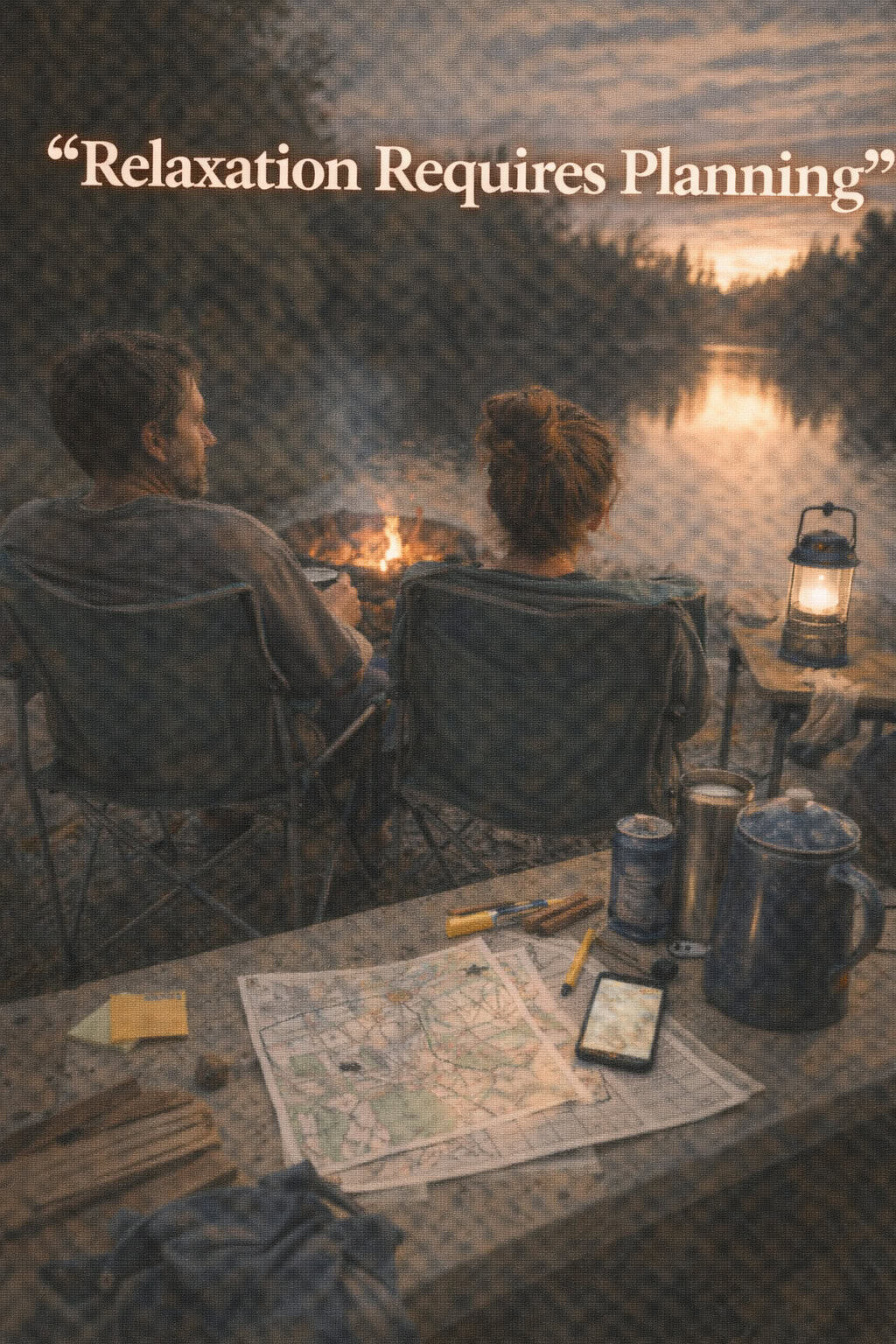
(Which feels ironic, but here we are.)
You didn’t come camping to be stressed.
You came to unwind. To slow down. To relax.
And yet—before you can relax, there’s a surprising amount of thinking involved.
Because in camping (and especially RV life), relaxation doesn’t just happen.
It is scheduled, structured, and quietly engineered.
🧠 1. Relaxation Is What Happens After Logistics
You don’t relax when you arrive.
You relax after:
-
parking is done
-
leveling is acceptable
-
hookups are working
-
nothing is actively leaking
-
and no one is hungry yet
Until then, your brain is in operations mode.
Relaxation is a post-setup benefit, not an arrival feature.
🗺 2. Choosing the Right Site Is Half the Work
A good campsite reduces decisions before you even get there.
You’re thinking about:
-
sun vs shade
-
spacing from neighbors
-
slope and drainage
-
proximity to roads or paths
Pick wrong, and relaxation requires workarounds.
Pick right, and it feels effortless (which is misleading, because you earned it).
🪑 3. Sitting Down Is a Process
Even sitting requires planning.
Where’s the shade?
Which way is the wind?
Will the sun move in 20 minutes?
Is the chair level?
Is the dog going to take this spot?
You don’t just sit.
You stage the sit.
Only then does relaxation activate.
🌬 4. Nature Adds Variables, Not Simplicity
Wind affects comfort.
Rain affects mood.
Heat affects patience.
Cold affects everything.
Relaxing outdoors means constantly adjusting to conditions—not fighting them, but accommodating them.
This is not failure.
It’s adaptive comfort management.
🍳 5. Meals Dictate the Schedule
You can’t fully relax if:
-
dinner isn’t planned
-
the grill hasn’t been addressed
-
or someone is about to ask, “What are we doing for food?”
Once meals are sorted, everything softens.
Hunger is the enemy of peace.
🧠 6. Decision Fatigue Delays Relaxation
The hardest part of camping isn’t physical effort—it’s mental load.
You’re deciding:
-
when to shower
-
when to conserve
-
when to move things
-
when to let things go
Relaxation arrives only after decisions slow down.
That’s why it often shows up later in the day, quietly, without announcement.
🧰 7. Experienced Campers Plan So They Don’t Have To
Veterans don’t plan more—they plan smarter.
They:
-
standardize routines
-
simplify gear
-
reduce options
-
accept “good enough”
They know that every decision removed upfront creates space for rest later.
Planning isn’t the opposite of relaxation.
It’s how you protect it.
😅 8. When Relaxation Finally Hits, It’s Real
At some point, you stop adjusting things.
You sit.
You breathe.
You notice the view.
That’s when it happens.
Not because everything is perfect—but because nothing needs your attention right now.
That’s relaxation.
Earned, not accidental.
💬 Final Thoughts
Relaxation requiring planning doesn’t mean you’re doing it wrong.
It means you understand how camping actually works.
You trade spontaneity for intention.
Chaos for systems.
And stress for earned stillness.
Once the groundwork is laid, relaxation shows up exactly as promised.
🐟 Want relaxation to arrive sooner? Use Campground Views to preview site layout, spacing, slope, sun exposure, and surroundings before you book—so fewer surprises stand between you and doing absolutely nothing.
🔗 Follow us for more RV life truths, practical camping wisdom, and content for people who know that peace doesn’t just happen—it’s scheduled.