Our Tires Are Fine. Probably. Hopefully.
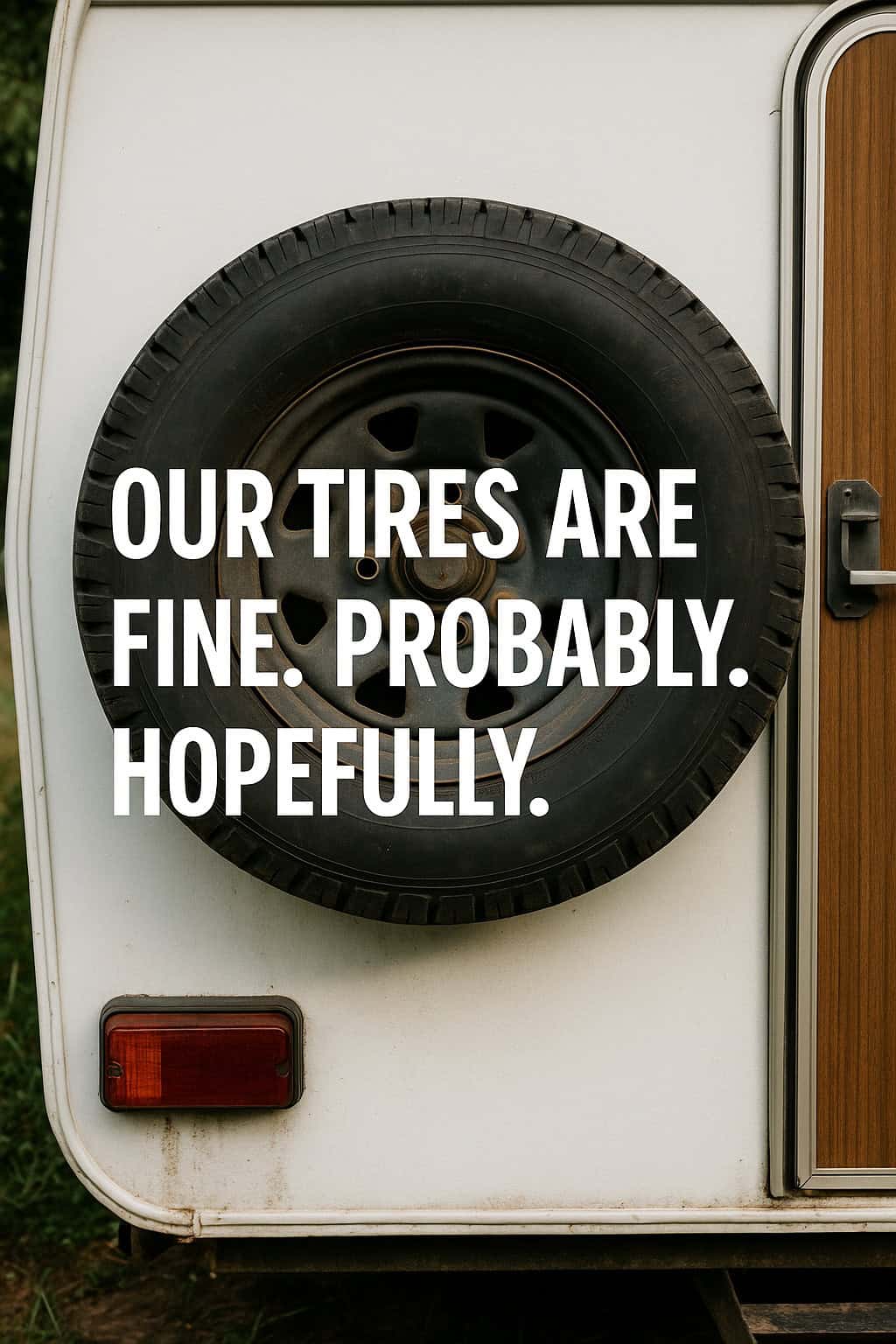
(Because “no warning lights” is not the same as “everything’s great.”)
There’s a special kind of faith involved in RV travel.
You’re cruising down the highway at 60 mph in a box full of cabinets, water, and hopes… all rolling on a few rubber circles you glanced at once in the driveway.
You tell yourself:
“They’re fine.”
“They look good.”
“There was tread last time I checked… whenever that was.”
Translation: You’re guessing. Respectfully.
Here’s the honest truth about RV tires, the mild denial we all live in, and how to move from “probably fine” to “confident enough to relax a little.”
👀 1. The Visual Check You Do in 3 Seconds Does Not Count
We’ve all done it:
quick glance
“Yeah, round, not flat, looks fine.”
climb in and drive
But tires can:
look okay and still be underinflated
hide cracks on the inside sidewall
age out long before they wear out
If your entire inspection is “yep, still there,” you’re not checking—you’re just acknowledging their existence.
📅 2. Tread Isn’t the Only Story (Age Matters, Too)
RV tires are sneaky.
You don’t drive them daily like a commuter car, so the tread often looks… great.
Meanwhile:
the rubber is aging
UV is drying them
sidewalls are quietly giving up on you
Most RV tires age out around the 5–7 year mark, sometimes sooner depending on load and conditions—even if they look okay.
If you don’t know their age, start with the DOT code on the sidewall. If you have to wipe off dust and squint… that’s already an answer.
🧯 3. Underinflation: The Silent Trip-Ruiner
Underinflated tires:
run hotter
flex more
wear faster
are much more likely to fail dramatically (and expensively)
And here’s the kicker:
They can look totally normal.
A basic routine:
check tire pressure when they’re cold (before driving)
use a decent digital gauge
follow the load/inflation charts or manufacturer recommendations—not vibes
“I kicked it and it felt firm” is not a measurement.
🧠 4. Load Ratings Are Not Suggestions
RV tires have load limits.
Your stuff has… no chill.
Between:
water tanks
gear
tools
random “just in case” equipment
You might be running those tires closer to their limit than you think.
If you’ve never:
weighed your rig (axle or full rig weight)
compared that to your tire rating
…you’re basically playing “tire roulette.”
🔔 5. TPMS Is Amazing—But It’s Not Magic
Tire Pressure Monitoring Systems (TPMS) are fantastic.
But they’re not:
a substitute for inspections
a guarantee against blowouts
an excuse to never bend down again
What they do give you:
early warning on slow leaks
alerts on pressure or temp changes
peace of mind on long hauls
What they don’t fix:
old, cracked rubber
overloaded axles
road debris that shreds everything instantly
Think of TPMS as your early-warning system—not your force field.
🧊 6. Temperature Swings Mess With Your Head (and Pressure)
Ever notice:
cold morning = lower tire psi
hot afternoon = higher psi
mountain drive = “what is happening?”
Temperature and elevation affect tire pressure.
That doesn’t mean something’s broken—it means physics is in a mood.
The key is:
set pressures based on cold tire readings
know your ideal range
avoid overreacting to every tiny fluctuation
Your goal isn’t perfection. It’s safe, stable, and within spec.
🧱 7. Blowouts Happen… But You Can Stack the Odds in Your Favor
No one plans for:
shredded tread
flapping fender trim
white-knuckle steering corrections
But you can reduce the risk by:
not overloading
replacing aged tires before they demand it
maintaining correct pressure
avoiding curbing and tight, abusive turns when possible
You can’t control everything on the road.
But you can stop pretending 10-year-old sidewalls are “still good.”
🧰 8. The “Bare Minimum Sanity” Tire Routine
If you want to feel less like you’re gambling, try this:
Before each travel day:
Walk-around: look for obvious damage, bulges, cracks
Check psi: at least once a day when actively traveling
Feel: after a drive, look for one tire that’s noticeably hotter than the others (can signal an issue)
Every season:
inspect sidewalls closely (inside and outside)
check date codes
clean and protect tires from UV where possible
Not hard. Very worth it.
💬 Final Thoughts
“Our tires are fine” is a comforting sentence.
“Probably. Hopefully.” is the part your nervous system hears.
You don’t need to become a tire engineer.
But a little attention—age, load, pressure, condition—turns tire anxiety into quiet confidence.
And that’s what you actually want rolling under you at 60 mph:
not guessing, not hoping… just prepared.
🐟 Want to avoid the kind of roads and sites that are hardest on your tires—tight turns, awkward angles, surprise curbs, and rough approaches? Use Campground Views to preview campground roads, entrances, and site layouts before you book, so you can plan smoother arrivals and gentler exits for your rolling rubber.
🔗 Follow us for more RV life truths, road sanity tips, and the kind of practical advice that keeps you rolling—on purpose, not on luck.