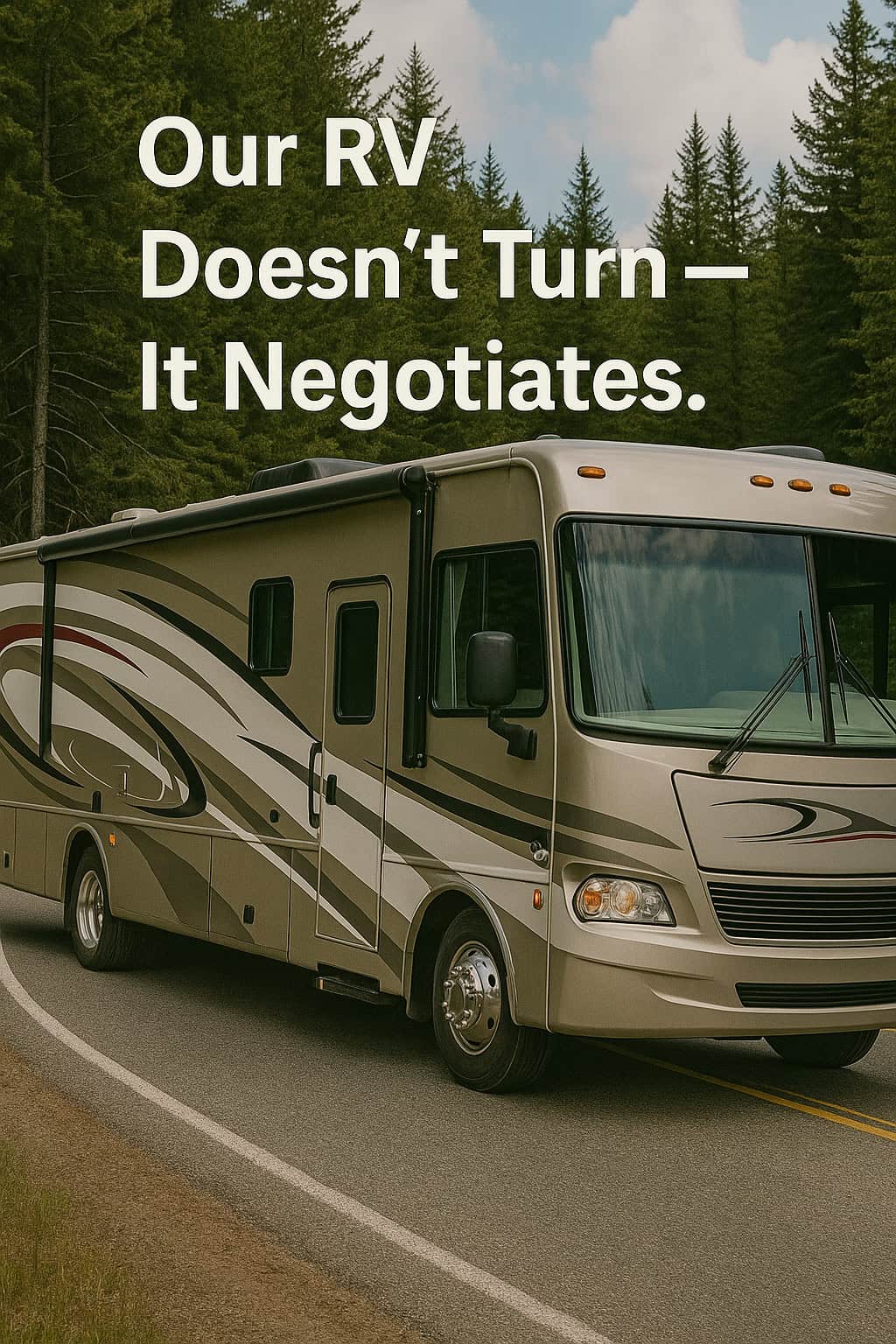
(Because every corner is a conversation, and the RV is always stubborn.)
You know that feeling when you’re approaching a turn and your brain does the math before your hands do?
“Okay… wide swing… watch the curb… don’t clip the post… please don’t let there be a car coming…”
Meanwhile, your RV is basically saying:
“I hear your plan. I reject it. Let’s compromise.”
Because an RV doesn’t turn. It negotiates—with the road, the campsite, the laws of physics, and your blood pressure.
🚌 1. Tight Turns Are Where Confidence Goes to Die
Parking lots. Fuel stations. Older campgrounds with “charming” layouts.
They’re all designed for vehicles that aren’t shaped like a small building.
Classic negotiation moments:
-
turning into a campsite loop with a stone pillar right at the apex
-
swinging wide while someone watches like it’s a live performance
-
making a three-point turn that becomes a five-point spiritual journey
📐 2. Your RV Has a Very Specific Turning Radius (And It’s Not Helpful)
Whether you’re towing, driving a Class C, or wrangling a long trailer, there’s always a moment where you realize:
This is not a turn. This is an arc.
And the arc requires:
-
more space than you thought
-
a slower speed than you want
-
and an audience you didn’t invite
🧠 3. You’re Not “Bad at Driving.” You’re Doing Geometry.
Turning an RV is basically a moving puzzle:
-
rear swing
-
tail tracking
-
curb distance
-
clearance on both sides
-
“is that branch low enough to ruin my day?”
You’re not driving. You’re calculating risk in real time.
🚗 4. The Real Enemy Is Other People’s Parking Choices
A tight turn is manageable until someone parks:
-
half in the road
-
right at the corner
-
directly opposite the entrance
-
or in a way that makes you question their upbringing
Suddenly your RV negotiation becomes hostage bargaining.
⛽ 5. Fuel Stations Are the Ultimate Negotiation Arena
A good fuel stop feels like winning an award.
A bad one feels like:
-
narrow lanes
-
sharp entries
-
blocked exits
-
and a sense that the designer has never seen an RV in their life
Pro habit: pick truck-friendly stations when you can. Your stress level will send a thank-you note.
🏕️ 6. Campground Roads: “Rustic” Is Not a Compliment
“Rustic” often means:
-
narrow
-
unlevel
-
tree-lined like a tunnel
-
and full of blind corners with no shoulder
It’s scenic. It’s charming. It’s also the reason your knuckles are white.
🧰 7. Your Best Turning Tools Aren’t Tools—They’re Habits
Want fewer negotiations and more clean turns? These habits help:
-
go slower than you think you need to
-
walk the route if the campsite entrance looks tight
-
use a spotter if you have one (and agree on simple signals)
-
plan your exit before you park so you don’t have to back out like a confused forklift later
-
don’t be afraid to reset (pull forward, straighten up, try again—pros do it too)
💬 Final Thoughts
Every RVer learns this eventually: the road doesn’t bend for you. Your rig doesn’t magically handle like a sedan. And some turns simply require negotiation, patience, and a deep breath.
But the good news? The more you drive, the more you learn your rig’s “language.”
And one day you’ll nail a tight turn smoothly… while someone watches… and you’ll pretend it was effortless.
🐟 Want fewer surprise “negotiation turns” at arrival? Use Campground Views to preview road access, turns, site approach, and spacing before you book—so you can avoid the entrances that feel like a trap.