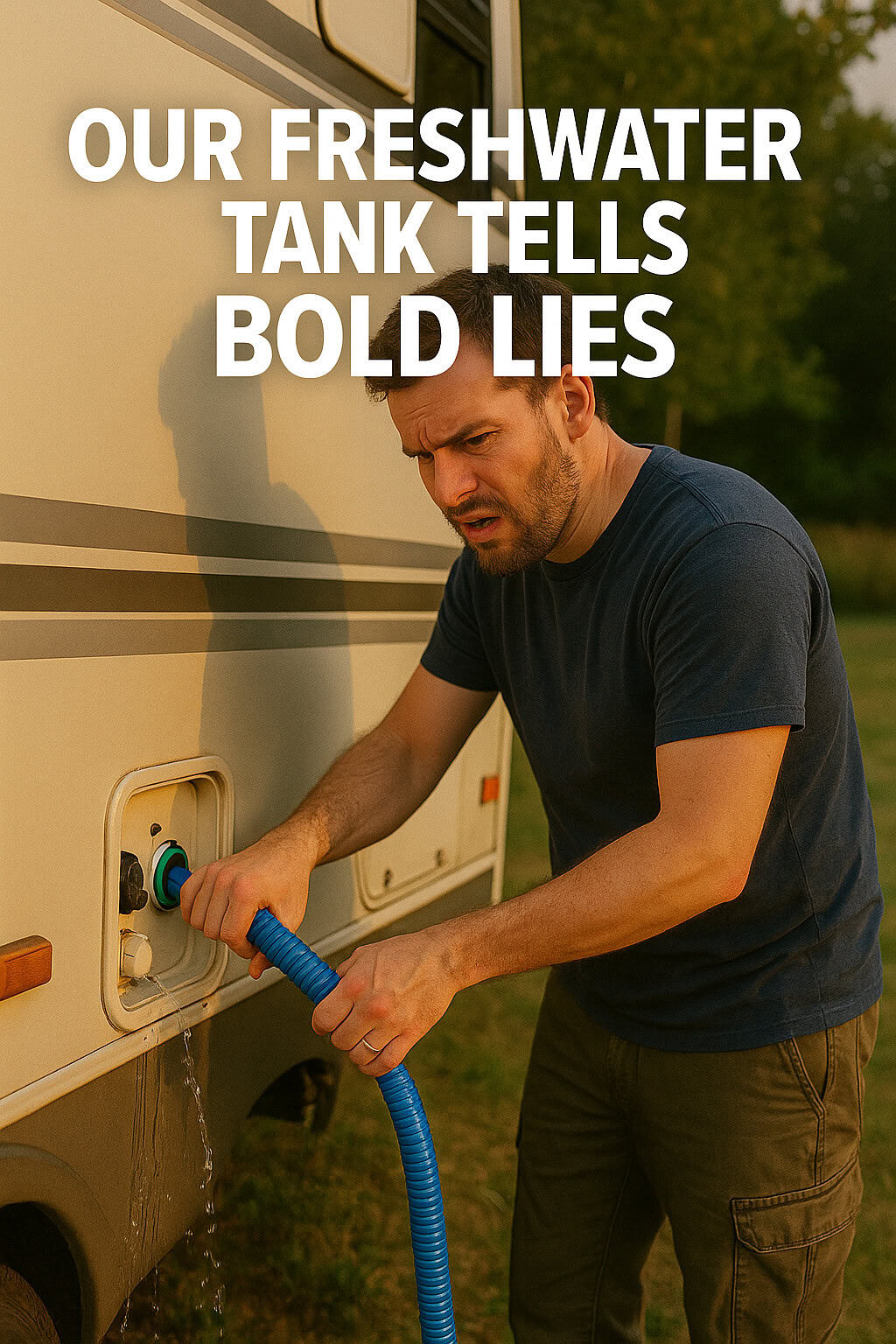
(Because that gauge has confidence… not accuracy.)
Your freshwater monitor will look you dead in the eyes and say:
FULL.
Meanwhile your tap is coughing like it’s on its last sip and your water pump is having a small panic attack.
RV tank gauges don’t “measure.”
They guess.
And they guess with the swagger of someone who has never been wrong in their life.
If you’ve ever topped off the tank, driven 20 minutes, and suddenly “lost” half your water—welcome. This is normal. Infuriating, but normal.
Here’s why freshwater readings are so dramatic, and how real RVers manage water without trusting that liar panel.
📟 1. The Gauge Isn’t a Gauge. It’s a Vibe Indicator
Most RV freshwater systems use basic sensors that aren’t exactly precision instruments. They’re more like:
-
“probably full-ish”
-
“maybe halfway”
-
“something is happening”
And once your tank has been used a few times, the readings get even more… imaginative.
If your monitor has ever shown:
-
100% for days
-
then jumped straight to ⅓
-
then back to ⅔ after you hit a bump
That’s not you. That’s the system doing interpretive water math.
💦 2. Sloshing Turns the Reading Into Random Poetry
Water moves. Your RV moves.
So your “level” changes constantly.
You could be:
-
parked slightly nose-down
-
on uneven ground
-
mid-drive
-
after a turn
-
after someone ran the sink for 12 seconds
And your gauge will react like the stock market.
If you want the most honest reading you’ll ever get, it’s usually when:
-
you’re parked
-
you’re close to level
-
the tank has been still for a bit
Even then… bold lies remain possible.
🚿 3. The Real Problem: You Only Notice When It’s Too Late
You don’t panic at “⅔.”
You panic when:
-
the pump cycles strangely
-
the tap sputters
-
the shower goes cold and you briefly see your ancestors
That’s why freshwater “management” isn’t about the gauge.
It’s about recognizing the signs your rig is about to betray you.
🔄 4. Your Water Pump Is the First One to Snitch
A healthy pump sounds consistent.
A “we’re running out” pump starts acting up:
-
longer run times
-
sputtering
-
cycling more often
-
sounding angrier than usual
If your pump suddenly sounds like it’s working overtime, don’t trust the panel—check your water reality.
🕳 5. Air in the Line = “We’re Fine” Until We’re Not
When the tank gets low, air can sneak into the system and make everything feel broken:
-
bursts of air from taps
-
inconsistent water pressure
-
the pump running longer than usual
You can have “some water left” and still get annoying symptoms—especially if you’re not level.
🧮 6. The Smart Approach: Track Use, Not Lies
The best water managers don’t stare at the gauge. They build simple habits:
-
top off before dry camping when possible
-
mentally note shower lengths
-
don’t waste water while waiting for hot water
-
do quick “tap checks” before committing to a long rinse
After a few trips, you’ll know your rig’s real-world pattern:
-
“This is two days of water.”
-
“This is one shower each and we refill.”
-
“This tank is a liar but we know the truth.”
🧴 7. Easy Ways to Stretch Freshwater Without Suffering
If you’re trying to make a tank last longer:
-
use a spray bottle + microfiber for quick cleanups
-
turn water off while soaping (hands, dishes, showers)
-
use a dish tub instead of running water
-
keep drinking water separate so you don’t burn through the tank making tea like a Victorian factory
You can still be comfortable—you just have to stop letting water run like you’re in a hotel.
🧠 8. The “Reality Check” Tricks That Actually Work
When you truly need to know what’s left:
-
listen for pump behavior changes
-
check your refill schedule (“we filled yesterday… so it can’t be empty”)
-
peek at the tank if your rig design allows access
-
look for leaks (because sometimes it’s not the gauge lying—it’s water leaving the building)
If you’re losing water faster than normal, assume:
-
a leak
-
a partially open valve
-
or a sneaky drain issue
before assuming you “used it all.”
💬 Final Thoughts
Your freshwater tank monitor doesn’t hate you.
It’s just wildly overconfident and deeply unqualified.
But once you stop believing it and start managing water with simple habits—pump awareness, usage tracking, and reality checks—you’ll worry less, stretch your tank further, and avoid the dreaded “sputter shower” moment.
🐟 Want to plan water use before you arrive? Use Campground Views to preview site conditions and layout—so you know whether you’re likely to be relying on tank water, dealing with long walks to spigots, or setting up in a way that makes water management easier from the start.
🔗 Follow us for more RV life truths, system survival tips, and humor for anyone whose dashboard gauges have more confidence than accuracy.