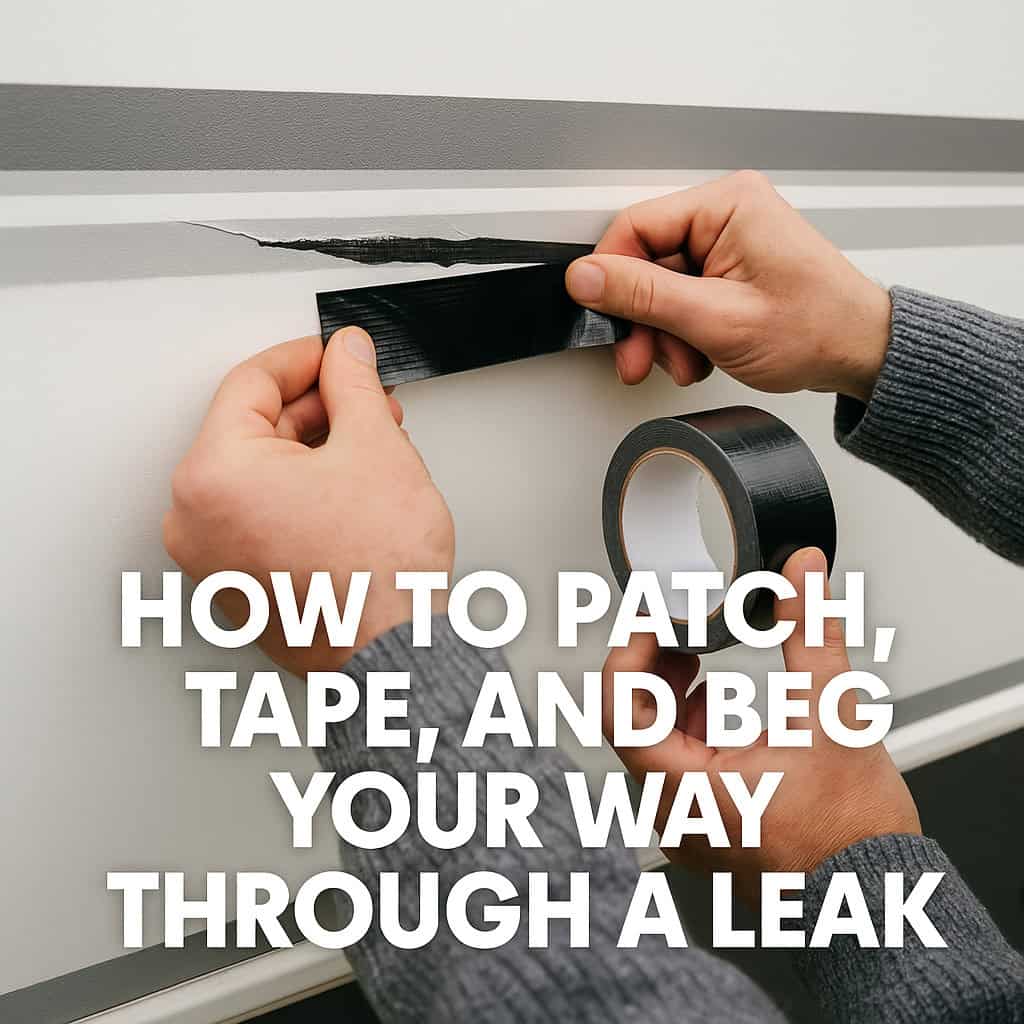
Because “just a drip” always means “total panic in 20 minutes.”
💧 The Leak Always Wins (Unless You Act Fast)
Leaks in an RV aren’t a matter of if, but when—and it’s never when you’re parked near a hardware store, in dry weather, with a mechanic on standby.
No, leaks happen on holidays, in the rain, or while someone is cooking spaghetti.
When water starts showing up where it shouldn’t, panic is optional—but action is mandatory.
🧰 Step 1: Breathe. Then Grab the Toolkit
Every RVer needs a panic patch kit. Here's what that looks like in real life:
Must-Have Emergency Tools:
-
Eternabond tape (the duct tape of RV roofs)
-
Flex Seal or silicone caulk (messy but miracle-ish)
-
Putty knife (for cleanup and regret removal)
-
Microfibre towels (soak it up fast)
-
Headlamp (because leaks love darkness)
-
Gloves (optional, but your future self will thank you)
Pro tip: keep these in one box labelled "LEAK STUFF – OPEN FIRST."
🕳️ Step 2: Stop the Flow, No Matter What
You don’t need to solve the leak immediately—you need to slow it down.
-
If it’s raining: tarp it, tape it, or tilt the rig slightly to guide the water away from the breach.
-
If it’s plumbing: turn off the pump or shut the water valve. Dry things off before doing anything else.
The goal: contain the chaos until you can think clearly.
🛠️ Step 3: Patch Like You Mean It (But Know It’s Temporary)
For Exterior Leaks:
-
Clean the surface. Dirt is the enemy of every adhesive.
-
Apply Eternabond over the crack or seam, pressing firmly and cursing lovingly.
-
Cover exposed screws or gaps with sealant or Flex Seal as needed.
For Interior Leaks:
-
Use towels and buckets. Yes, it’s inelegant. But it’s also survival.
-
Trace the source. Drips lie—it’s never just above the puddle.
🧽 Step 4: Dry Everything—Before It Smells Like Regret
Mildew moves fast. Open windows. Turn on fans. Lift cushions, rugs, and under-storage.
Use rice, DampRid, or anything that absorbs moisture.
Bonus points if you also check for signs of soft walls or bubbling panels later—those are your warning signs for long-term damage.
🧘 Step 5: Embrace the Chaos (And Book a Repair)
The emergency patch is for survival, not serenity.
Make peace with the fact that:
-
The fix won’t be pretty
-
You’ll tell this story later
-
It’s probably not the only leak hiding in your rig
Call a mobile tech when possible—or YouTube it, carefully. (And never trust a “one-size-fits-all” fix, because RVs love custom drama.)
🚿 Leaks Are a Rite of Passage
You're not a real camper until you've patched your roof with duct tape while standing on a step stool in a thunderstorm.
Or begged your grey tank not to spill just yet.
But here’s the secret: every leak is a learning moment.
And every patch job is proof that you're the kind of person who keeps going anyway.
🧭 Looking to avoid the unexpected before you even book your site?
Use Campground Views to see where you’re parking before your sealant gets tested.