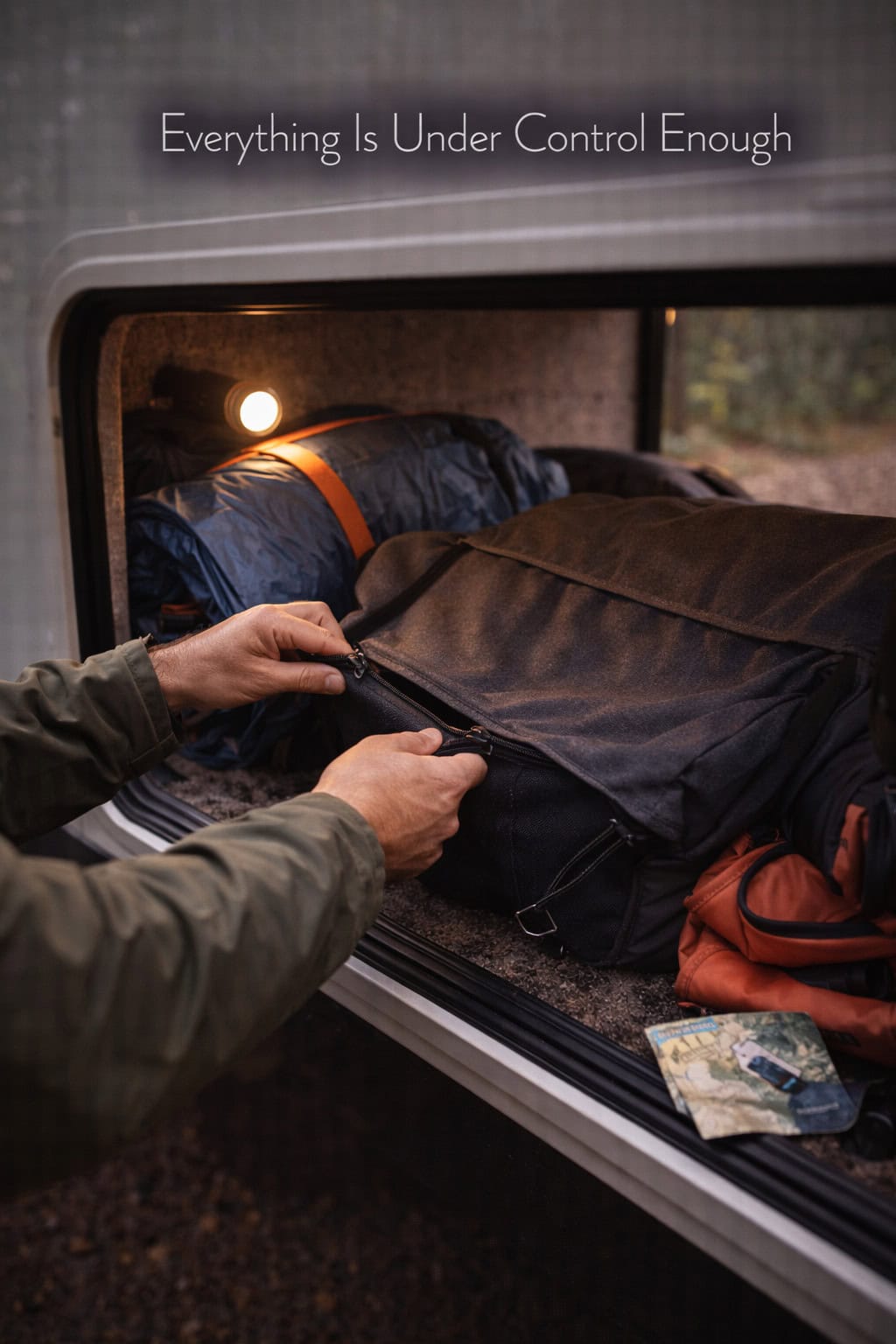
(Sufficiency has been achieved.)
Nothing is perfect.
Nothing is spiralling.
And after a quick internal scan, the conclusion settles comfortably:
Everything is under control enough.
🧠 1. “Enough” Is the Key Metric
Not flawless. Not locked down.
Just stable enough that:
-
nothing urgent is pending
-
no surprises are escalating
-
intervention can wait
That’s the threshold that matters.
🔄 2. Control Is Distributed, Not Centralised
You’re not gripping every detail.
Some things are:
-
holding on their own
-
behaving within tolerance
-
unlikely to demand attention
You trust the system—and yourself.
😅 3. Awareness Has Replaced Anxiety
You know what’s happening.
Not every variable. But enough of them.
That awareness prevents panic and preserves energy.
🧭 4. You’re Ready, If Needed
This is important.
“Under control enough” doesn’t mean disengaged.
It means:
-
alert
-
capable
-
prepared to step in
But not hovering.
🛠 5. Further Tightening Would Add Friction
More control right now would:
-
create stress
-
introduce errors
-
solve problems that don’t exist
You choose restraint.
🧠 6. Saying It Sets the Tone
“Everything is under control enough.”
That sentence:
-
calms the room
-
stops unnecessary adjustments
-
legitimises forward motion
Everyone relaxes—slightly.
🧘 7. Momentum Continues Smoothly
Not because things are ideal— but because nothing is blocking progress.
That’s success in practice.
🧠 8. You’ll Reassess Later
And you should.
For now, this level of control is correct.
💬 Final Thoughts
“Everything is under control enough” isn’t complacency.
It’s calibration.
You assessed risk, confirmed stability, and chose not to overmanage—a decision rooted in experience.
That’s not lowering standards.
That’s operating efficiently—right where you are.
🐟 Want to reach “under control enough” faster next time? Use Campground Views to preview layout, access, and conditions before you arrive—so fewer variables compete for attention.
🔗 Follow us for more RV life truths, calm-competence humour, and content for people who’ve absolutely paused, scanned the situation, and said, “Yes. This will hold.”