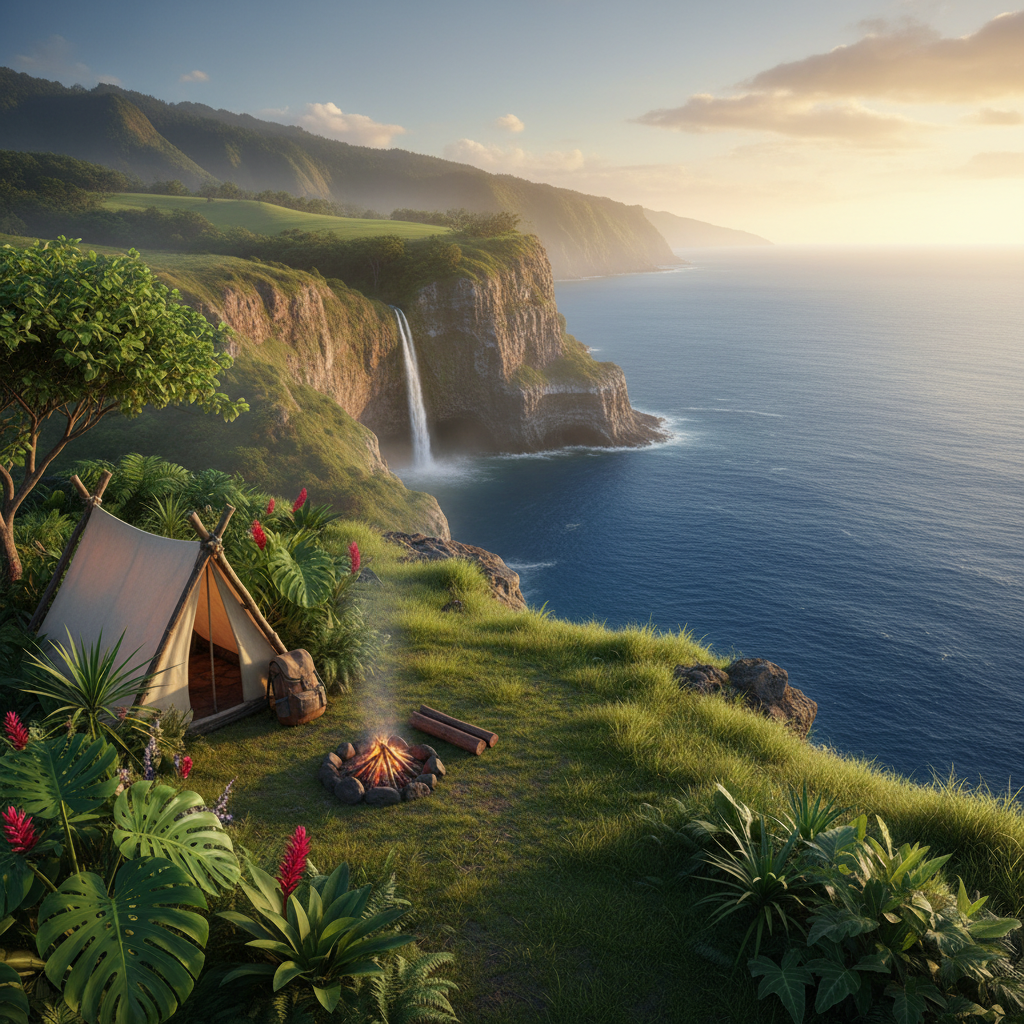
Where the Rainforest Meets the Sea: Discovering Kipahulu's Remote Magic
Tucked into the remote eastern flank of Maui, the Kīpahulu District of Haleakalā National Park is one of Hawaii's best-kept camping secrets. Far from the resort crowds of Kāʻanapali and Wailea, this dramatic stretch of coastline — where cascading waterfalls tumble through bamboo forests before spilling into the Pacific — rewards adventurous campers who are willing to make the journey. And if you love the spirit of boondocking (primitive camping with minimal amenities and maximum connection to nature), Kīpahulu is your kind of paradise.
At CampgroundViews.com, we're passionate about helping campers discover places like this — spots where the payoff is extraordinary precisely because the path isn't easy. Here's everything you need to know to camp off-grid near the Kīpahulu coast like a pro.
What Makes Kīpahulu Feel Like Boondocking
Kīpahulu Campground is a primitive NPS campground that strips camping back to its beautiful basics. There are no hookups, no dump stations, no camp store, and no hot showers. What you get instead is a grassy bluff overlooking the ocean, the sound of waves crashing below, and some of the darkest, starriest skies you'll ever see from Hawaiian soil. It's not technically off-grid boondocking in the BLM desert sense, but the remote location, lack of services, and wilderness immersion make it feel every bit as adventurous.
Getting here requires driving the infamous Road to Hāna — a winding, narrow, 64-mile journey with 620 curves and 59 bridges. Many rental car companies technically prohibit the full loop, so plan accordingly and embrace the adventure as part of the experience.
Essential Gear for Your Kīpahulu Camp Setup
Because you're camping far from any town with supplies, preparation is everything. Think of packing like a true boondocker — self-sufficient and ready for anything.
- Water: Potable water is available at the campground, but bring extra. Hawaii's humidity and trail hiking will drain you faster than you expect.
- Food for the full stay: The nearest grocery options are a significant drive away. Pack more than you think you need, and bring a quality camp stove.
- Rain gear and a waterproof tent: Kīpahulu sits in one of the wettest regions of Maui. A four-season tent or a heavy-duty rainfly isn't overkill — it's essential.
- Bug protection: Mosquitoes love the lush rainforest environment. Long sleeves, pants, and a quality repellent will make evenings much more enjoyable.
- Portable power: Solar panels or a power bank keep your devices charged without any hookups in sight.
- Cash: Fees are collected on-site, and card readers aren't always reliable in remote areas.
What to Do When You're There
The Kīpahulu area is adventure-dense. The ʻOheʻo Gulch — commonly called the Seven Sacred Pools — is a short walk from camp and one of Maui's most iconic natural landmarks. Swimming in the pools (when open and safe) is a bucket-list experience. The Pīpīwai Trail winds 4 miles through towering bamboo forests to the thundering 400-foot Waimoku Falls. Bring your sense of wonder and give yourself a full day for this hike.
Early mornings at camp are pure magic. Brew your coffee, watch the light lift off the ocean, and listen to native birds wake up the forest. Nights are equally spectacular — with minimal light pollution, the Milky Way arcs brilliantly overhead.
Planning Tips Before You Go
Permits and campsite reservations are required through the National Park Service's recreation.gov system, and spots fill up fast — especially for weekends and holiday periods. Book as early as the system allows. Stays are limited to three consecutive nights.
Before your trip, do your homework on CampgroundViews.com to explore virtual tours of Hawaii campgrounds and read fellow campers' firsthand reviews. Knowing what to expect makes the difference between a stressful trip and a seamless one.
The Boondocker Mindset in a National Park Setting
Even within a managed park, Kīpahulu demands the boondocker's core values: Leave No Trace, pack in what you pack out, respect the land and its cultural significance, and come prepared to rely on yourself. The Kīpahulu area is deeply sacred to Native Hawaiian culture — tread lightly, learn the history, and camp with gratitude.
This is remote Hawaiian camping at its most authentic. Pack smart, arrive humble, and let Kīpahulu's raw, rain-kissed beauty do the rest.