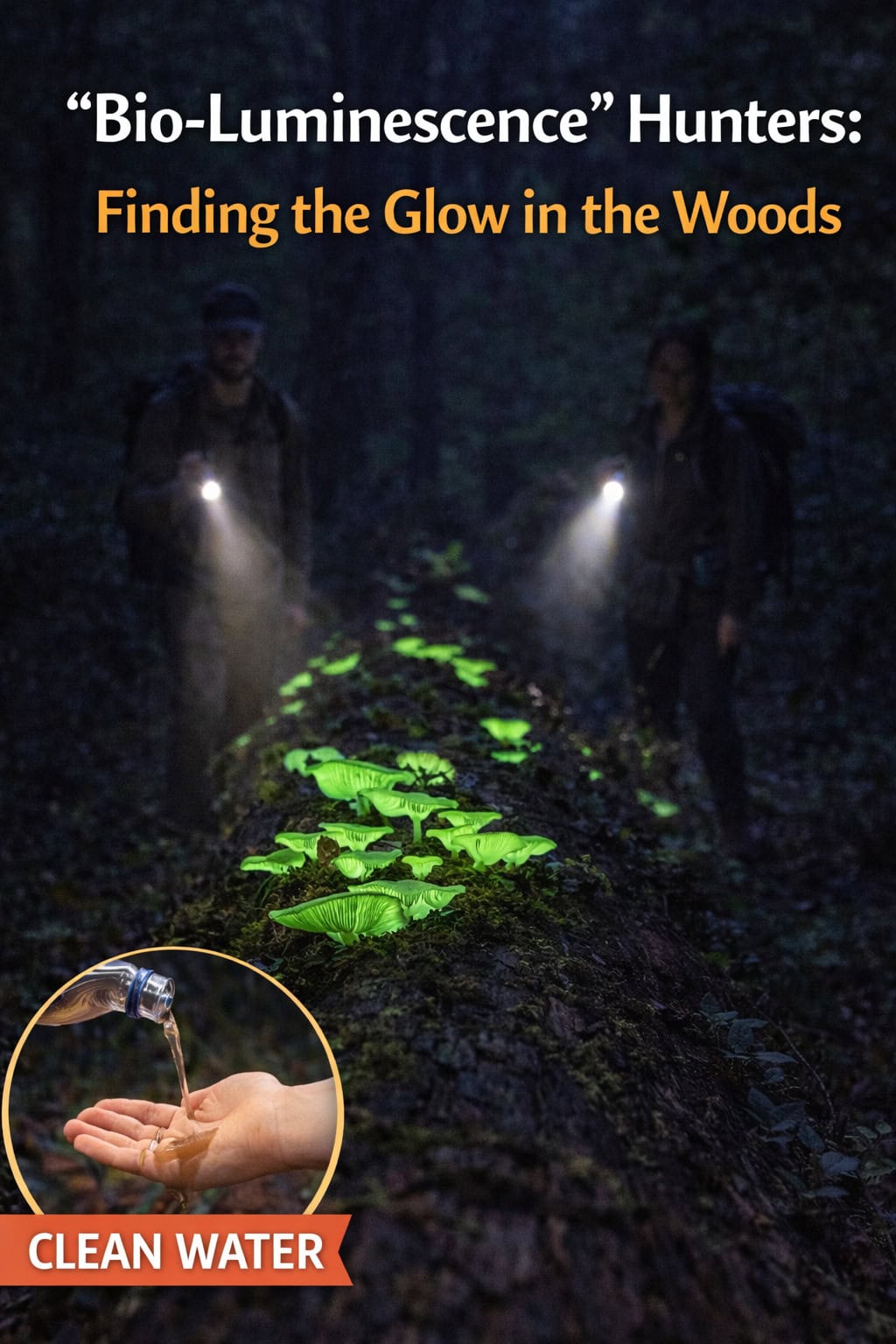
How to Spot Nature’s Living Neon Signs
As the sun dips below the horizon and the campground fades into darkness, most people think the "show" is over. But for a Bioluminescence Hunter, the adventure is just beginning. In the deepest, darkest corners of the woods, nature has its own set of "batteries" that don't need a USB plug.
Bioluminescence is the production and emission of light by a living organism. It’s not a reflection of the moon; it’s a Chemical Reaction happening right inside the creature’s body. Here is your field guide to finding the glow.
1. The "Firefly" Morse Code
The Science: This is the most famous glow in the campground. Fireflies (which are actually beetles!) use light to talk to each other.
-
The Chemistry: Inside the firefly's abdomen is a chemical called Luciferin. When it mixes with oxygen and an enzyme called Luciferase, it creates light with almost zero heat.
-
The Physics: Humans use lightbulbs that get very hot (wasting energy). A firefly is 100% efficient—it produces "Cold Light."
-
The Mission: Watch the patterns. Different species have different "codes." Some blink fast, some "fade" in and out, and some even blink in sync with thousands of others!
2. The "Foxfire" Mystery (Glowing Fungus)
The Science: Have you ever seen a piece of rotting wood or a tree stump that glows a ghostly, dim green? That is Foxfire.
-
The Biology: This isn't the wood glowing; it’s a specific type of fungus (like honey mushrooms) that lives inside the wood.
-
The Theory: Scientists think the fungus glows to attract insects. The insects crawl on the glow, get covered in fungal spores, and then fly away to "plant" the fungus in a new tree.
-
The Hunt: Look for old, damp logs in the shade. You’ll need "True Dark" to see it—turn off your flashlight and let your eyes adjust for 10 minutes.
3. The "Glow-Worm" Cave (Fungus Gnats)
The Science: If you are camping near caves or very steep, mossy embankments, you might see tiny "stars" clinging to the rocks.
-
The Action: These are often the larvae of Fungus Gnats. They hang sticky, glowing silk threads (like a spider's web) to catch tiny flies.
-
The Physics: The glow acts as a "Lure." In the pitch black, a tiny bug thinks the glow is an exit or a patch of sky, flies toward it, and gets stuck in the "Glow-Worm's" trap.
4. The "Ghost Mushroom" (Omphalotus)
The Science: In some parts of the woods, large orange mushrooms grow at the base of trees. During the day, they look like regular Jack-O-Lantern mushrooms.
-
The Magic: At night, the gills (the ridges underneath the mushroom cap) emit a steady, eerie green glow.
-
The Observation: Unlike fireflies that "blink," mushrooms provide a constant light. This is called Steady-State Bioluminescence.
5. The "Hunter’s" Tech: UV vs. Dark-Adaptation
To find these living lanterns, you need to use your own biological sensors:
-
Dark Adaptation: Your eyes have cells called "Rods" that are great for seeing low light. It takes about 20 minutes in total darkness for your rods to fully "power up." One look at a phone screen or a bright LED flashlight will reset your timer to zero!
-
The Red-Light Hack: Use a flashlight with a Red Filter. Red light doesn't "bleach" your night vision as much as white light does, allowing you to walk safely while still being able to see the "Foxfire."
-
The UV Secret: While not bioluminescence, many things in the woods (like scorpions, some lichens, and certain flowers) Fluoresce (glow) under a blacklight. Carrying a small UV flashlight can reveal a hidden "neon" world!
Pro Tip: The "Milky Way" Connection. The best time for hunting bioluminescence is during a New Moon (when the moon is not visible). Without the bright moonlight "washing out" the forest floor, the tiny chemical lights of fungi and insects become much easier to spot.
Final Thoughts
Finding bioluminescence is like finding a secret message from the Earth. It reminds us that even in the dark, the forest is full of energy and "conversations" we usually can't see. When you spot your first piece of Foxfire or a glowing mushroom, you’ve officially entered the "Night Crew" of the campground.
Good luck on the hunt!
🐟 Want to find a site with "Dark Sky" status for the best hunting? You want a site far away from the bathhouse lights and streetlamps! CampgroundViews.com lets you take a 360-degree tour of the park. You can look at the "Light Pollution" (where the lamps are) and pick a site tucked into the shadows where the bioluminescence will shine the brightest.
Scout your "Glow-Zone" at CampgroundViews.com!