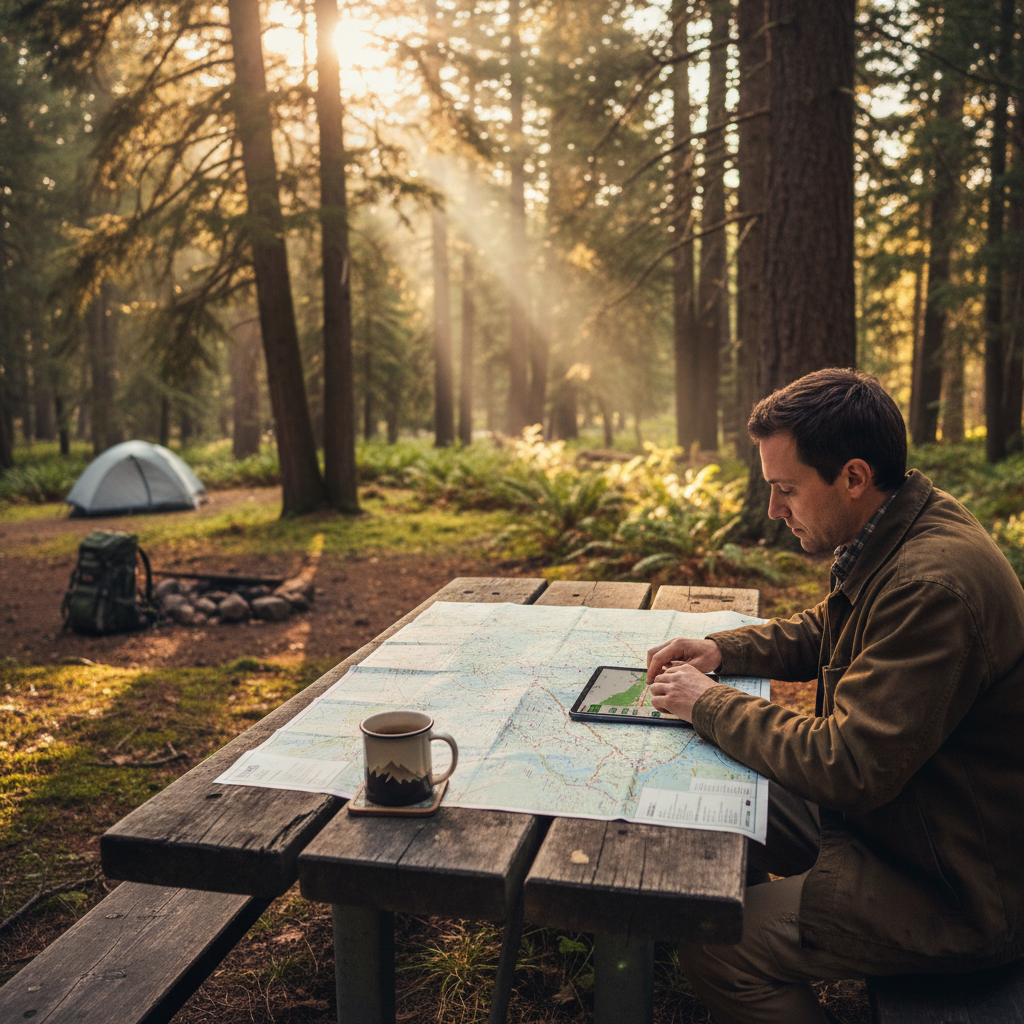
The Art of Decoding Campground Details Before You Go
Every seasoned camper has a story that starts the same way: "The listing said it was perfect, but when we got there..." Whether it was a stunning National Park Service campground that turned out to be rockier than a quarry, or a lakeside site that was actually 400 yards from the water and separated by a busy road, campground details can be a masterclass in managed expectations. Learning to read between the lines — whether you're browsing NPS.gov or scrolling through CampgroundViews.com — is one of the most valuable skills any outdoor traveler can develop.
What National Park Service Listings Tell You (And What They Don't)
The National Park Service does an admirable job of providing campground details on their website. You'll find site dimensions, hookup availability, reservation windows, and fee schedules. But official listings are written to inform — not to inspire, warn, or paint a vivid picture. They won't tell you that the "tent-only" loop at a beloved canyon park gets battered by afternoon winds, or that the pull-through sites in a popular valley campground face directly into the setting sun every single evening.
That's not a knock against the NPS — it's simply the nature of standardized information. Government databases are built for compliance and consistency, not storytelling. And that gap between the official record and the real experience? That's where smart campers do their homework.
The Details That Actually Matter Most
When you're evaluating any campground — national park or otherwise — here are the details savvy travelers dig for beyond the basics:
- Site privacy and spacing: A campground can have 200 sites and feel completely intimate, or 40 sites and feel like a parking lot. Photos and virtual tours tell this story far better than any data table.
- Noise environment: Is the campground near a highway, a generator loop, or a group camping area? These details rarely appear in official listings but dramatically affect your sleep.
- Ground conditions: Rocky, sandy, muddy after rain, sloped — these factors matter enormously for tent campers and van dwellers alike.
- Shade and sun exposure: A shadeless campground in July in the desert Southwest is a very different beast than the same campground in October.
- Actual proximity to amenities: "Walk to the lake" can mean 50 feet or half a mile depending on who's writing the listing.
How Virtual Tours Change Everything
This is where CampgroundViews.com genuinely transforms the planning experience. With over 3,600 virtual tours of campgrounds across North America, you can walk a site before you ever load the car. Want to see whether those "spacious" NPS sites actually have room for your 32-foot fifth wheel? Pull up the virtual tour and see it with your own eyes. Curious if the forest loop at a mountain campground actually has the tree canopy the photos suggest? Take a look in July versus October — the difference can be dramatic.
Virtual tours don't replace campground listings. They complete them. Think of official details as the skeleton of your decision and visual exploration as the flesh that makes it real.
Building Your Pre-Trip Research Stack
The most prepared campers layer their research like they layer their clothing — each piece serving a different purpose. Here's a reliable approach:
- Start with the official NPS or state park listing for hard facts: dates, fees, reservation requirements, and accessibility information.
- Cross-reference on CampgroundViews.com for virtual tours, photos, and a broader view of the surrounding area.
- Read recent traveler reviews specifically filtered to your travel style — RVers need different intel than tent campers.
- Check recent posts on camping subreddits or Facebook groups for hyper-current conditions, especially after major weather events.
- Call the campground directly if you have specific needs. Rangers and camp hosts are often more candid than any website.
The Joy of Being Genuinely Surprised — In a Good Way
Here's the silver lining in all of this: when you do your research thoroughly, the surprises that remain are almost always the wonderful kind. The unexpected wildflower bloom. The marmot colony nobody mentioned in the reviews. The way the light hits the canyon walls at 6 a.m. in a way no photograph has ever quite captured. Do your homework on the details so you can be fully present for the magic. That's the real art of campground research — and it's a skill that pays dividends on every single trip.